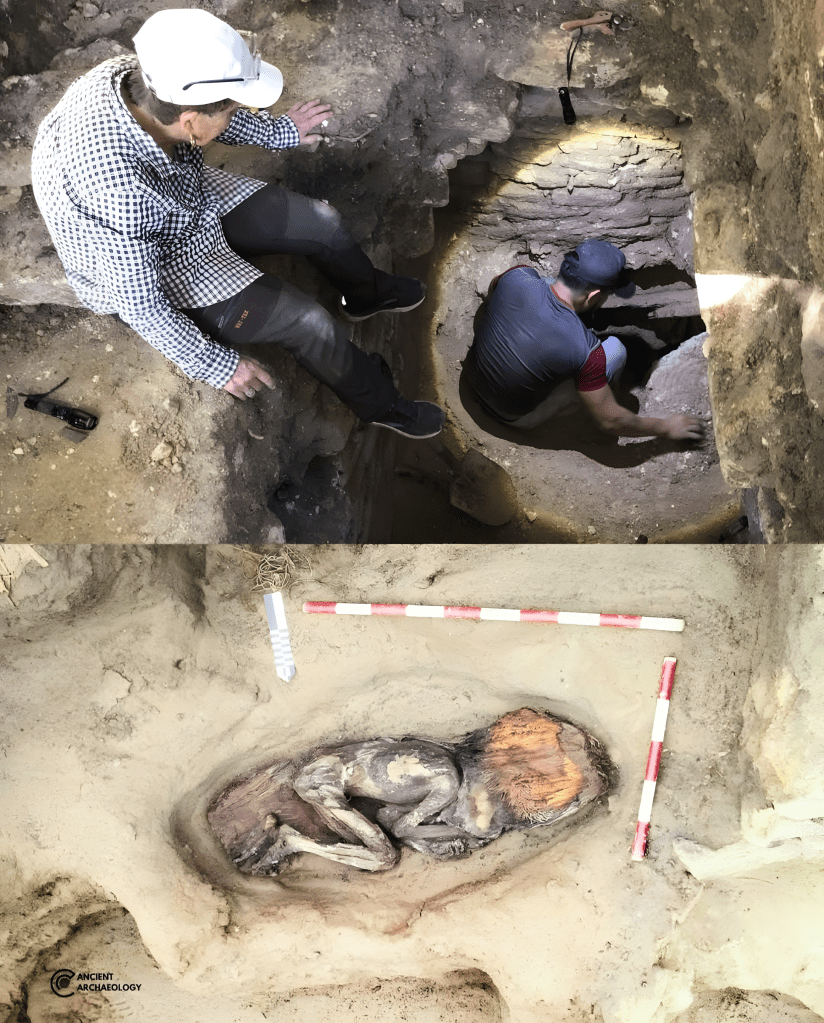
시베리아 야말 반도Yamal Peninsula 얼어붙은 땅 깊은 곳에서 고고학자들은 놀랍도록 보존된 미라를 발굴했다.
이 미라는 약 8,000년 전 홀로세 초기 것으로 추정한다.
원형 매장 구덩이 안에 태아 자세로 웅크린 이 사람 시신은 피부, 머리카락, 그리고 매장용 천 흔적을 여전히 간직하고 있어 영구동토층의 자연 보존 상태를 증명한다.
주변 퇴적물은 이 시신이 삶과 죽음의 순환에 대한 경의를 반영하는 매장 의식을 치른 고대 수렵 채집 공동체 일부였음을 시사한다.
아이의 평화로운 안식을 바라보면, 얼어붙은 땅 속에서 수천 년을 넘어 뻗어 나가는 연약하지만 영원한 인류의 침묵의 연속성을 느낄 수밖에 없다.
Deep beneath the frozen soil of Siberia’s Yamal Peninsula, archaeologists uncovered a remarkably preserved mummified child, believed to date back nearly 8,000 years to the early Holocene period. The body, curled in a fetal position within a circular burial pit, still retains traces of skin, hair, and burial wrappings, a testament to the natural preservation of permafrost. Surrounding sediments suggest this was part of an ancient hunter-gatherer community whose burial rituals reflected reverence for the cycle of life and death. Gazing upon the child’s peaceful repose, one cannot help but feel the silent continuity of humanity — fragile yet enduring — reaching out across millennia through the frozen earth.
 HeriTrip.com
댓글 남기기