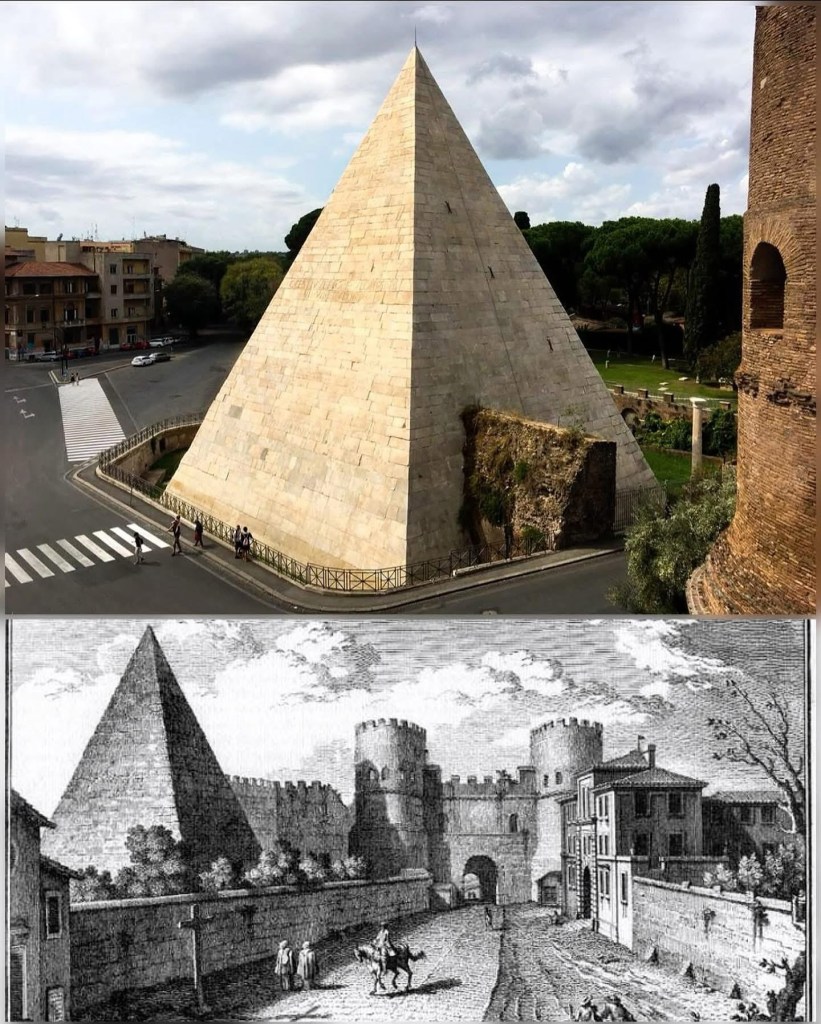
기원전 18년에서 기원전 12년 사이에 건설된 케스티우스 피라미드Pyramid of Cestius[세스티우스 피라미드라고도 한다]는 고대 로마의 가장 흥미로운 랜드마크 중 하나로, 도시 성벽에 자리 잡은 아름다운 이집트 양식 피라미드다.
이 인상적인 건축물은 로마의 부유한 관리였던 가이우스 케스티우스Gaius Cestius[당시 라틴어 발음을 존중한다면 가이유스 케스티유스 정도로 적어줌이 좋다] 무덤으로 지어졌다.
각 면 길이가 29.6미터(97피트), 높이는 37미터(121피트)에 달하는 이 피라미드는 아우구스투스 이집트 정복 이후 이집트 문화에 대한 당시 사람들의 관심이 커졌음을 보여준다.
더욱 놀라운 것은 원래의 흰색 대리석 외벽을 그대로 간직한 채 잘 보존되어 있다는 점이다.
이 피라미드 생존 이야기는 매우 독특하다.
서기 3세기에 아우렐리아누스 성벽에 통합되어 거의 2천 년 동안 세월의 흐름 속에서도 보호받았기 때문이다.
Constructed between 18 and 12 BC, the Pyramid of Cestius stands out as one of ancient Rome’s most intriguing landmarks—a stunning Egyptian-style pyramid nestled against the city walls.
This impressive structure was built as a tomb for Gaius Cestius, a wealthy Roman official. Measuring 29.6 meters (97 feet) on each side and soaring to a height of 37 meters (121 feet), the pyramid reflects the era’s growing fascination with Egyptian culture following Augustus’s conquest of Egypt.
What makes it even more remarkable is its well-preserved condition, still showcasing its original white marble casing. Its survival story is quite unique—during the 3rd century AD, it was integrated into the Aurelian Walls, which shielded it from the ravages of time for nearly two millennia.
 HeriTrip.com
댓글 남기기