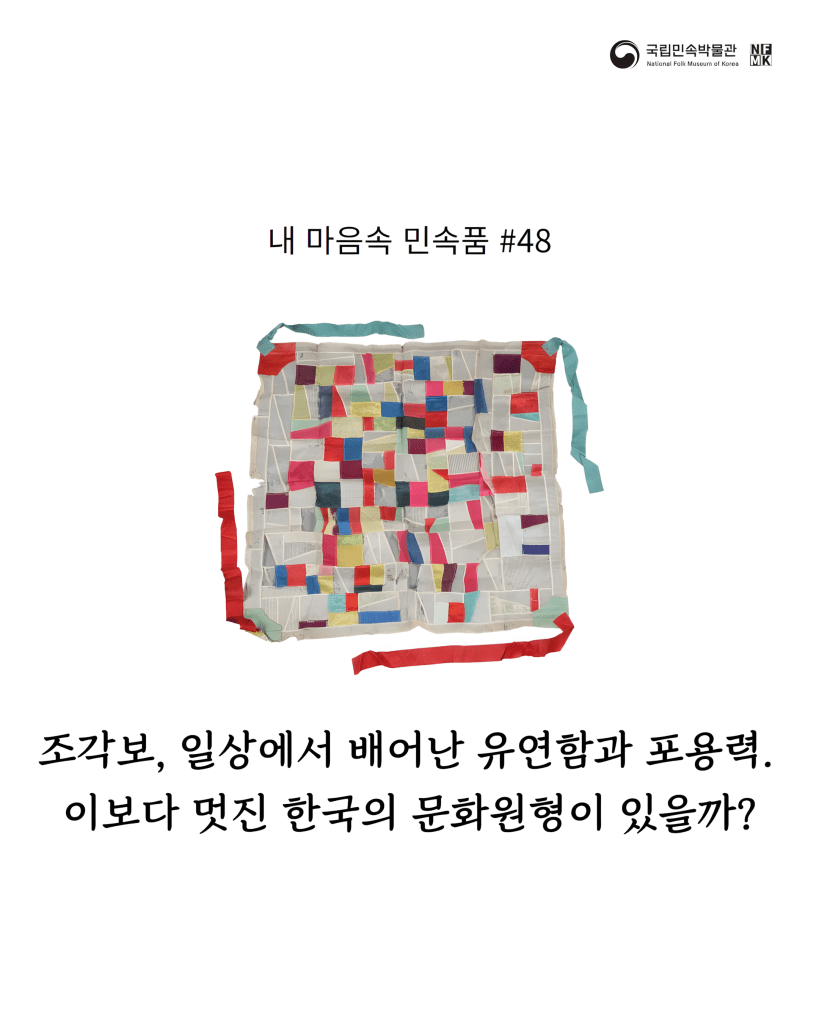
Jogakbo, Representing Flexibility and Embracement in Daily Life: Korea’s Best Cultural Archetype
Bojagi, from a designer’s perspective, is an extraordinarily beautiful everyday object. I would like to share a special memory I have about Bojagi.
In 2011, I was in charge of the National Folk Museum’s MI (Museum Identity) rebranding project, and it was challenging because there seemed to be no perfect symbol of Korean folk culture. Then, I came across the book Lee O-young’s Bojagi Humanities.
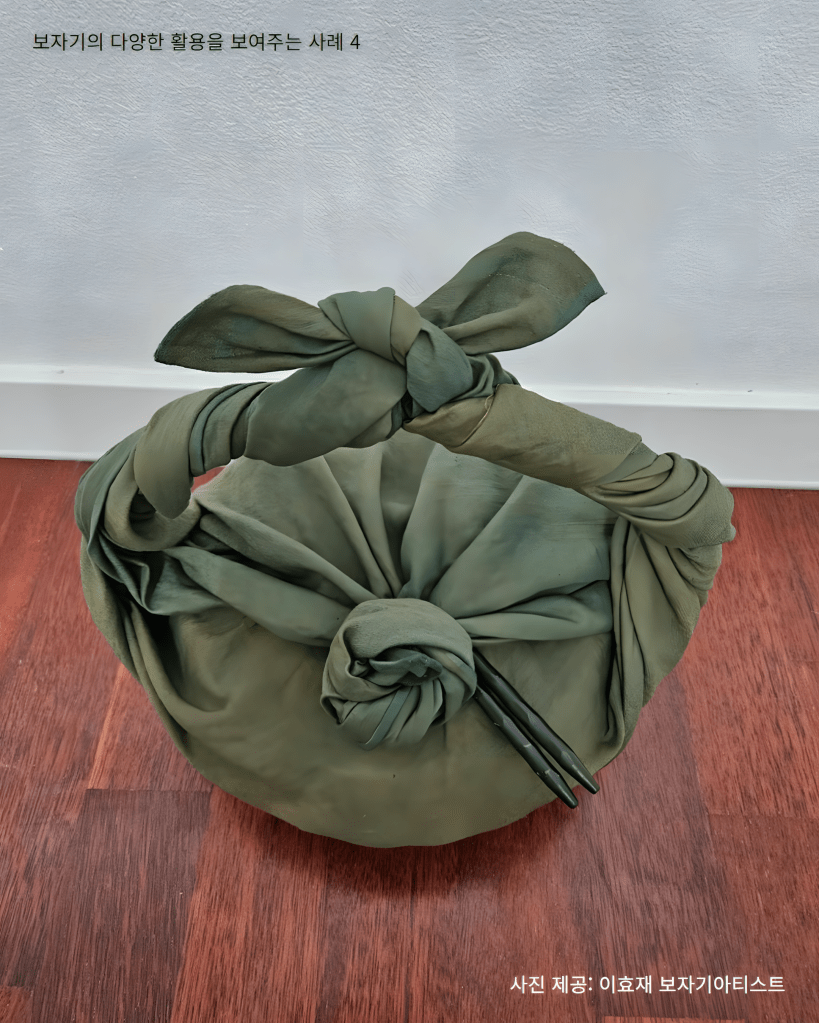
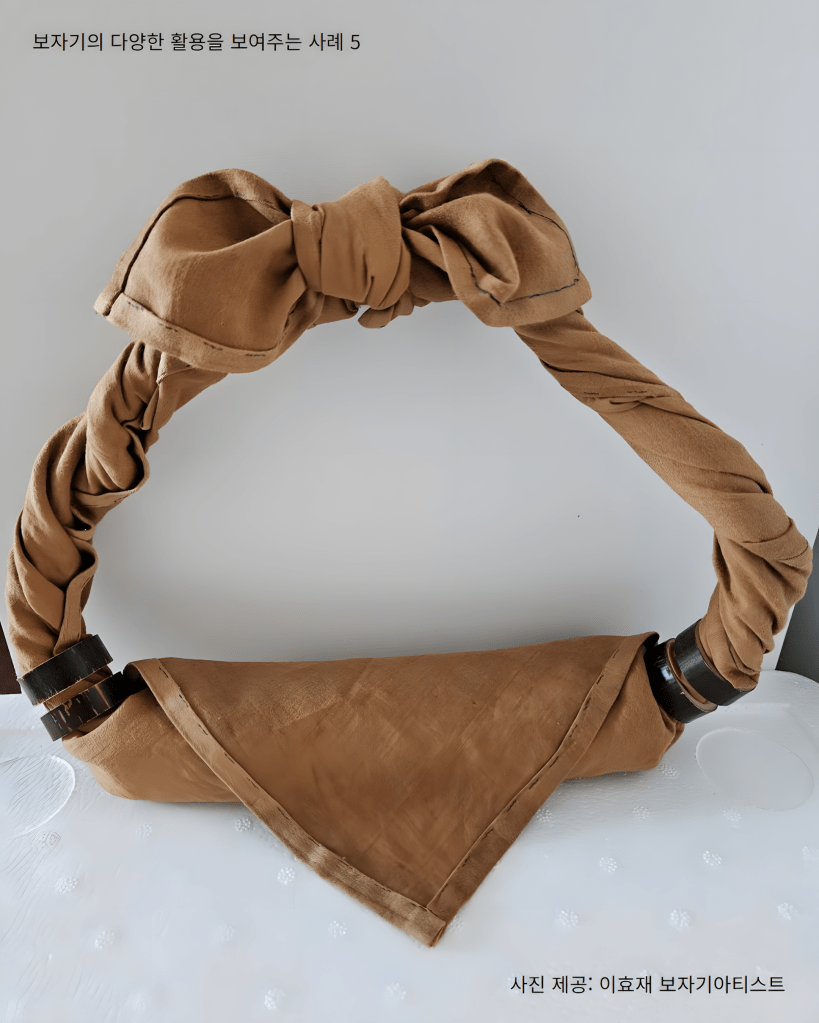
Dr. Lee O-young said, “Randoseru (backpacks) represent Japanese culture, while Bojagi represents Korean culture.” Bojagi can transform into covers, wrappers, and mats.
It can become a backpack carrying books or a curtain over a window. You might even remember pretending to be Superman with a Bojagi cape when you were young. Bojagi can take the shape of a circle when wrapping round objects and a rectangle when wrapping rectangular ones.
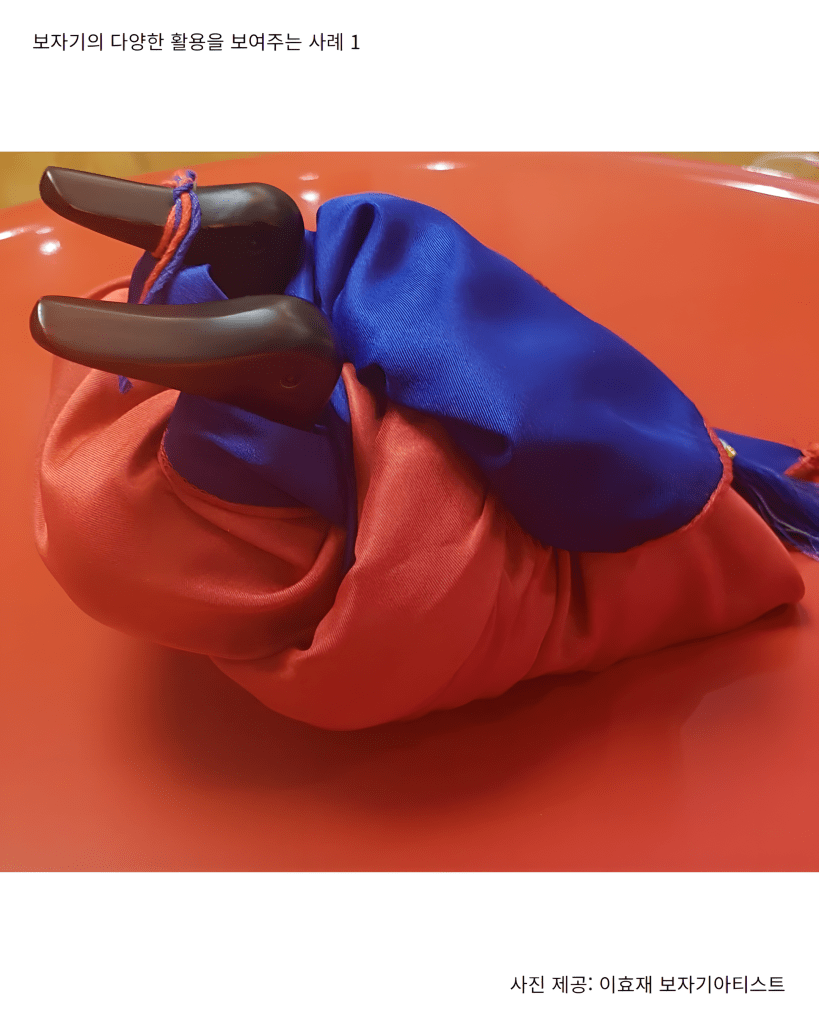

According to Dr. Lee, this flexibility and embracing nature represent a uniquely Korean cultural archetype, which is distinct from Western culture.
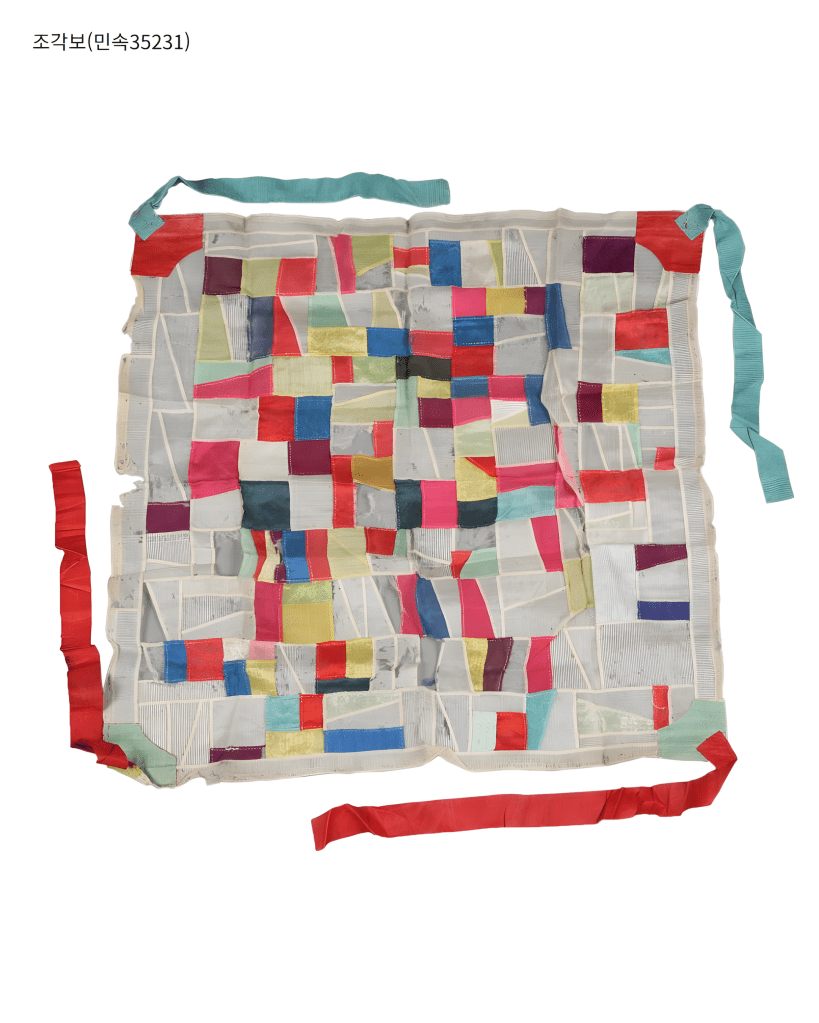
It was truly a eureka moment of insight, and I realized it could be used for the National Folk Museum of Korea’s identity. So I designed the new MI symbol inspired by Bojagi, especially Jogakbo, symbolizing collaboration and harmony.
Usually, spiritual culture is represented through objects such as tea utensils in a tea ceremony, but conversely, Bojagi is unique in that the object itself gives rise to spiritual culture, serving as a source of philosophical reflection.
Therefore, I value Bojagi as a precious artifact representing this mindset and attitude: “Be flexible, useful, and open.” It is exactly the result of everyday wisdom that our ancestors embraced long before the era of OSMU (One Source, Multi Use).
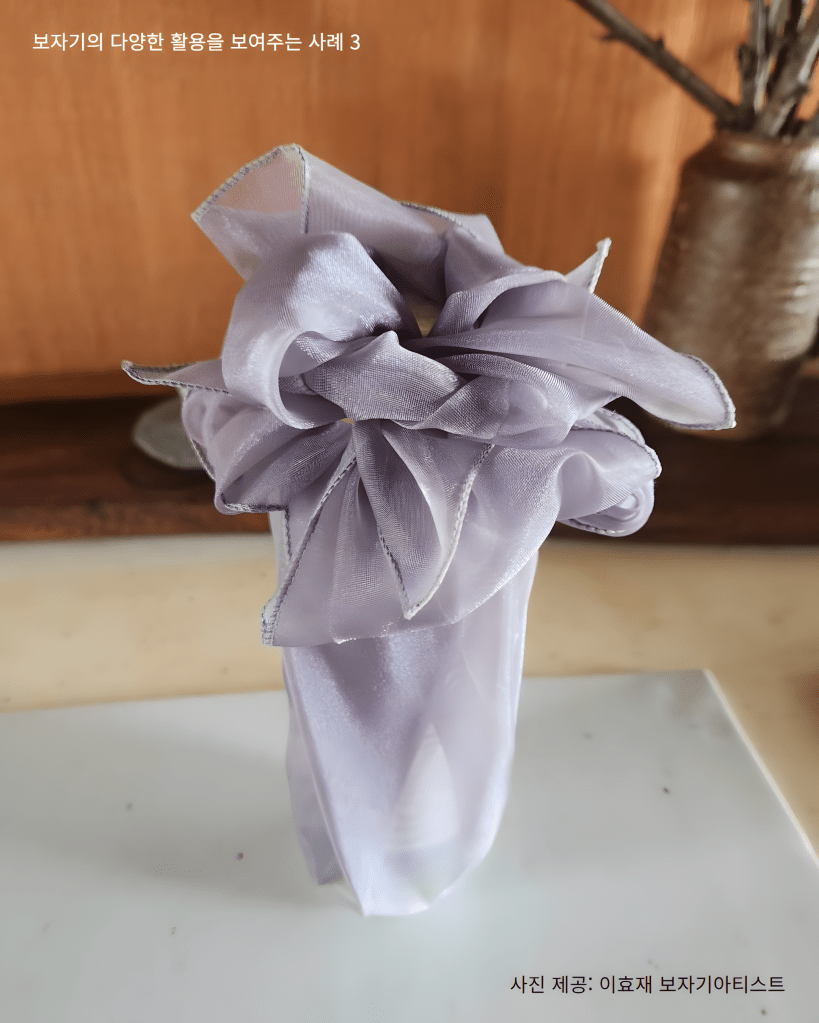
*On October 29, NFMK Paju will hold a special lecture titled “Bojagi Opens Courtesy, Dignity, and Beauty“ featuring Hanbok designer, as well as Bojagi Artist, Ms. Lee Hyojae.
Although registration has already closed, you can still explore the beauty and philosophy of Bojagi at NFMK.
Written by Cindy Miok Choi, Curator of the National Folk Museum of Korea
Artifact Information: Jogakbo (Minsok35231)
조각보, 일상에서 배어난 유연함과 포용력.
이보다 멋진 한국의 문화원형이 있을까?
보자기는 디자이너의 시선에서 볼 때 너무나 훌륭하고 멋진 생활 소품입니다. 또한, 보자기에는 개인적으로 특별한 에피소드도 담겨있습니다. 2011년 우리 관 MI(Museum Identity) 개편 사업을 담당했을 때 ‘민속’을 대표하는 유물이나 상징물을 찾기 어려워 고민하던 중 『이어령의 보자기 인문학』이라는 책을 만났습니다.
故 이어령 박사님의 통찰에 따르면 “일본의 문화는 란도셀(책가방)이고 우리의 문화는 보자기다”라고 하셨습니다. 보자기는 덮으면 덮개가 되고, 쓰면 쓰개가 되고, 바닥에 깔면 깔개가 됩니다. 책을 싸면 책가방이 되고, 창문에 치면 커튼이 됩니다. 어깨에 두르면 슈퍼맨 날개가 되는 기억도 유년 시절 한 번쯤은 있을 것입니다. 동그란 물건을 싸면 동그래지고, 네모난 물건을 싸면 네모가 되는 보자기의 유연함과 포용력을 박사님께서는 서양과 대비되는 한국 문화의 원형이라고 하셨습니다. 이는 우리 박물관에도 대입할 수 있는 무릎을 ‘탁’ 치게 하는 통찰이었습니다. 그래서 새 MI를 위한 심볼을 보자기로, 그중에서도 협업과 조화를 상징하는 조각보를 모티브로 디자인했었습니다.
보통은 정신문화를 기물로 표현하는데(가령 다도에서 다기처럼) 보자기는 기물이 정신문화 즉 철학적 사유의 단초로 연결되는 독특한 경험이기도 했습니다. 하여 보자기는 저에게 “얼마나 유연할 것인가 또 유용할 것인가, 포용할 것인가!”라는 사고와 태도를 대변하는 소중한 유물이 되었습니다.
그야말로 OSMU(One Source, Multi Use)시대를 내다본 선조들의 삶의 지혜의 산물인 것입니다.
*10월 29일 국립민속박물관 파주에서는 한복 디자이너 겸 보자기아티스트 이효재 선생님의 특강 ‘보자기로 펼치는 예와 격 그리고 미’가 열립니다. 신청은 마감되었지만, 보자기의 멋과 철학은 국립민속박물관에서 계속 이어집니다.
글: 최미옥 국립민속박물관 학예연구사
소장품 정보: 조각보(민속35231)
 HeriTrip.com
댓글 남기기