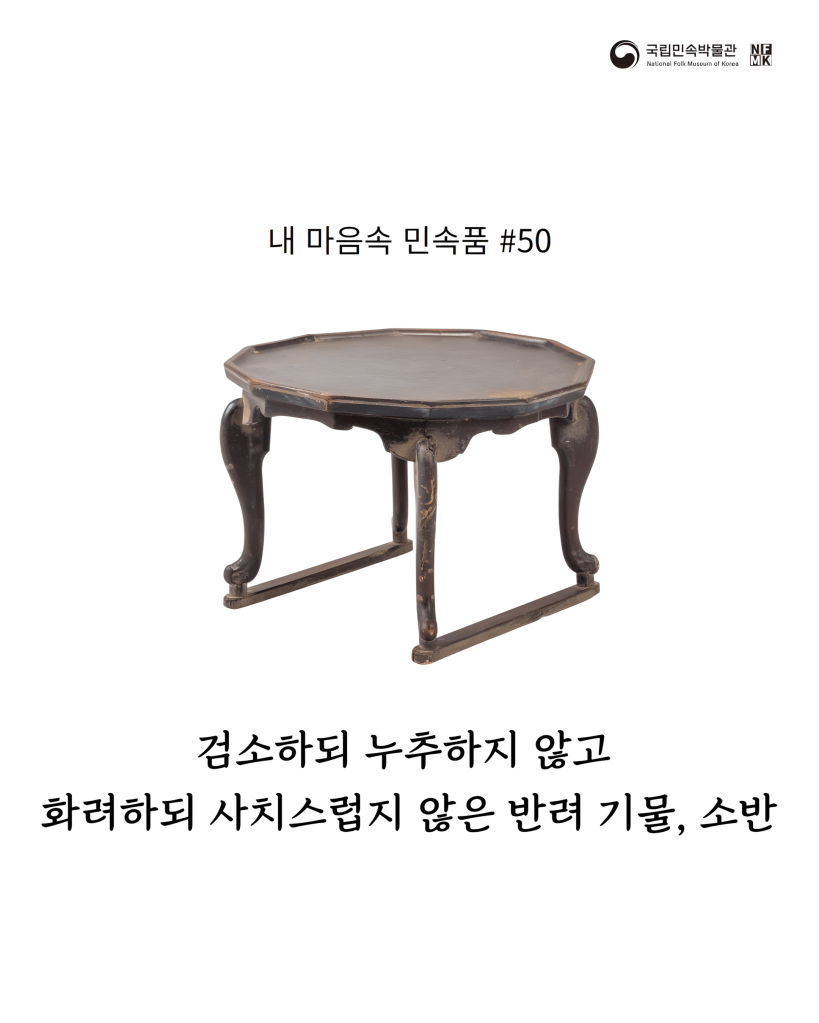
Simple Yet Not Shabby, Splendid Yet Not Extravagant — the Companion Object, Soban.
Soban, which literally means ‘small table,’ is a representative household item that embodies the traditional Korean virtues of Geomibullu Hwaibulchi (Simple yet not shabby, splendid yet not extravagant).
Hanok, the traditional Korean house, is designed for floor-sitting living. Because the kitchen is separated from the main living quarters, a lightweight and portable table was essential for bringing meals into the room — and soban was perfectly suited to this need.
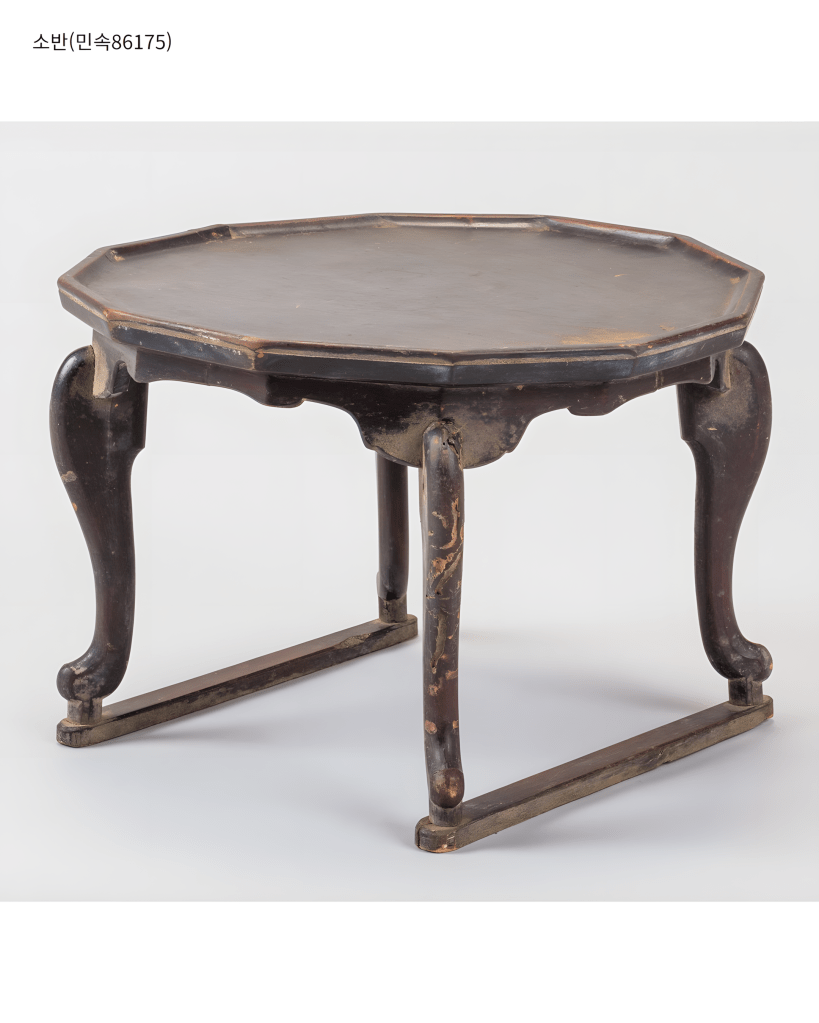
Soban also reflects Korea’s traditional dining custom of eating individually rather than sharing a communal table. In Yangban (Korean Confucian scholar) households, where ancestral rites and guest hospitality were common, the number of sobans displayed in Daecheong (the main hall of a hanok) symbolized the family’s size and social standing.
Although modern lifestyles favor eating together at Western-style dining tables with chairs, I still regularly use a small table — not only because it appeals to my aesthetic sensibilities, but also because it reminds me of warm, happy moments from my life.
I recall the comforting aroma of a meal as my grandmother lovingly carried a small dining table toward me. I picture my young child quietly doing homeworks at a small table. I remember sipping fragrant tea across a small table with a dear friend.
Each of these memories is deeply connected to the presence of this humble table, making it all the more meaningful to me.
Sobans come in various shapes and sizes, depending on the region where they were made. I personally recommend the Sixteen Storage Hall at the National Folk Museum of Korea Paju, where you can view a wide range of sobans at a glance. It is also a place I hold dear.
- Geomibullu Hwaibulchi(儉而不陋 華而不侈): Simple yet not shabby, splendid yet not extravagant
Written by Cindy Miok Choi, Curator of the National Folk Museum of Korea
Artifact Information: Soban (Small Dining Table) (Minsok86175)
검소하되 누추하지 않고 화려하되 사치스럽지 않은 반려 기물, 소반
소반(小盤)은 말 그대로 작은 상입니다. 선조들이 지향하던 ‘검이불루 화이불치(儉而不陋 華而不侈)* 의 미덕을 보여주는 대표적 생활 기물입니다.
우리의 전통 가옥인 한옥은 좌식 생활을 하는 구조이며 부엌과 방이 분리되어 있어 가볍게 들고 이동할 수 있는 반상이 필요했는데 소반은 이에 최적화된 가구입니다.
또 겸상을 하지 않고 일인상을 받던 우리 생활 문화를 대변하며, 제사나 손님을 치러야 하는 양반집들은 대청에 걸린 소반의 개수로 집안의 규모를 보여주기도 했습니다.
오늘날은 입식 구조에 겸상 방식으로 라이프 스타일이 바뀌었지만 저는 여전히 소반을 자주 사용합니다. 이 작은 상이 주는 미감이 좋기도 하고, 어릴 적 외가에서 할머니께서 내어주시던 밥상의 추억, 아이가 어릴 적 소반 앞에 다소곳이 앉아 숙제를 하던 모습, 반가운 친구와 친밀하게 마주 앉아 소반에 내온 차를 마시던 기억 등 따뜻하고 행복한 순간이 담겨 있기 때문입니다.
이러한 소반은 지역별로 고유의 디자인으로 만들어져 다양한 형태와 크기를 갖고 있습니다. 우리 관 파주의 16수장고는 이 다양한 소반들을 한눈에 볼 수 있어 개인적으로 너무나 애정하는 장소입니다.
- 검이불루 화이불치(儉而不陋 華而不侈): 검소하되 누추하지 않고 화려하되 사치스럽지 않다는 뜻
글: 최미옥 국립민속박물관 학예연구사
소장품 정보: 소반(민속86175)
 HeriTrip.com
댓글 남기기