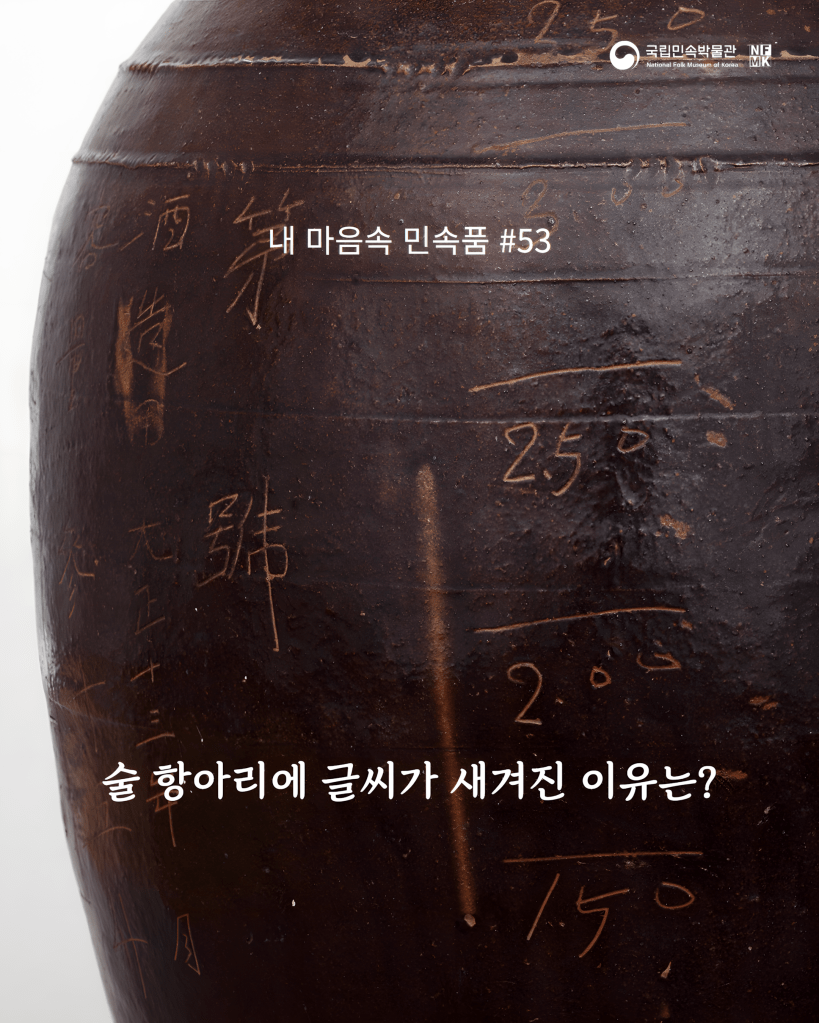
Why Are There Inscriptions on Hangari (Alcohol Jar)?
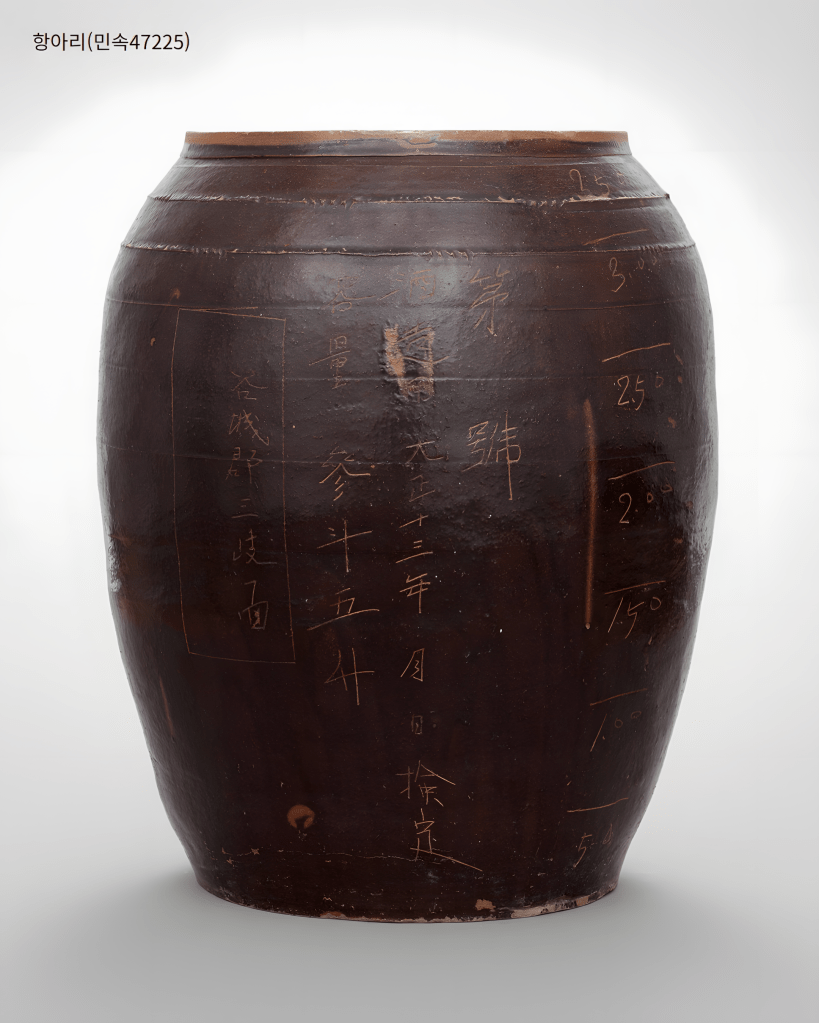
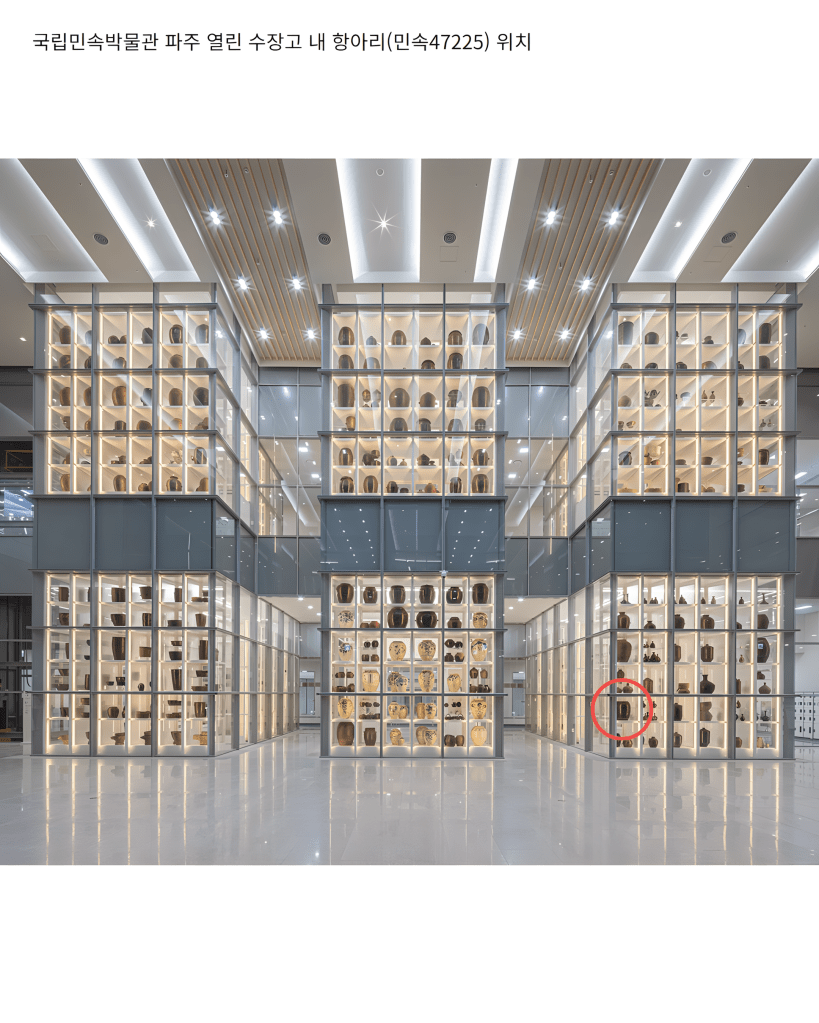
At Open Storage 6 of the National Folk Museum of Korea, Paju, you will find a jar that particularly catches your eye. ‘第 號’, ‘酒造用 大正十三年 ○月 ○日檢定’, ‘容量 參斗五升’, ‘50, 100, 150, 200 …’ Rough inscriptions, lines, and numbers are engraved at regular intervals on the jar’s surface. What do these markings signify?
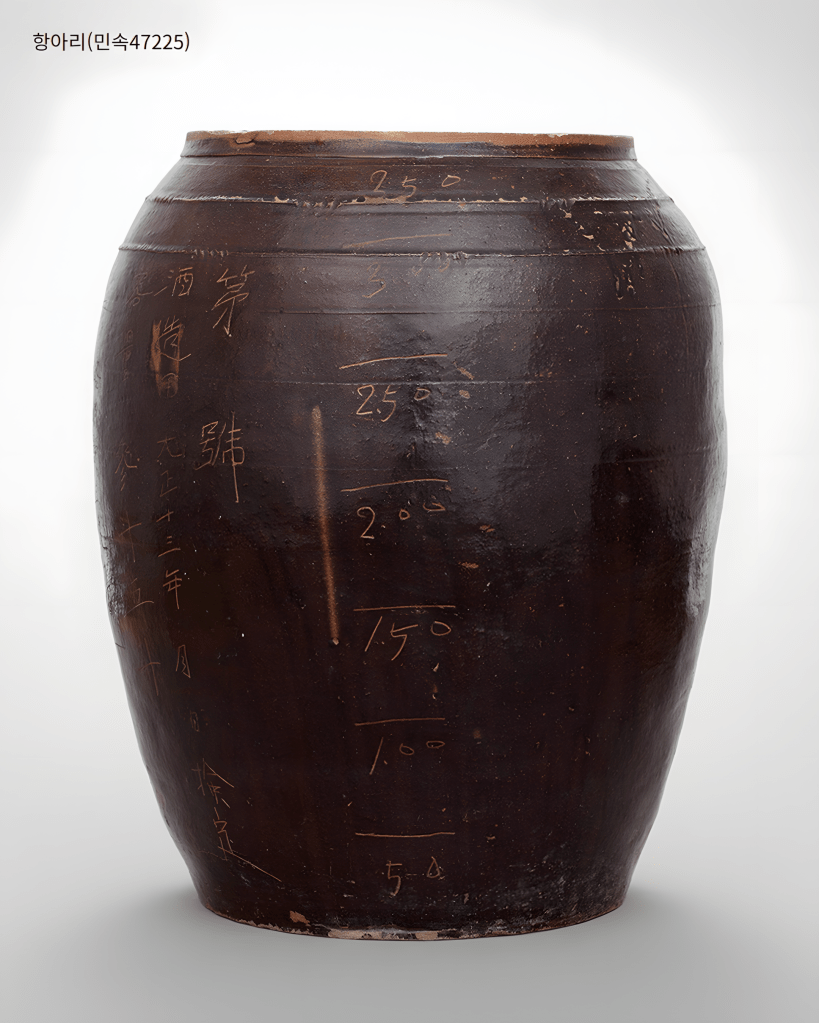
The artifact, Hangari (Jar) (Minsok 47225), is believed to have been used in a distillery in Samgi-myeon, Gokseong-gun, Jeollanam-do, since 1924. The inscriptions and marks indicate verification and monitoring by tax or government offices to track alcohol production.
To track tax revenue(稅收), the local tax office instructed officials to engrave details such as purpose (for alcohol), serial number (Ho), volume (3 Mal 5 Dae), and inspection date (1924.XX.XX) on the jar, and to maintain a separate jar inspection record. The numbers and scales were used for accurately measuring the amount of alcohol.
In traditional Korean society, alcohol was typically brewed at home as needed, a practice known as Gayangju (家釀酒). But, this tradition changed dramatically following the implementation of the Liquor Tax Act of 1909 and the Liquor Tax Order of 1916.
During Japanese rule, a brewery license was required to make alcohol at home. In practice, this policy functioned as a prohibition on homemade alcohol, as the Japanese colonial government granted licenses only to those who produced above a specified volume or imposed higher tax rates on homemade alcohol than on alcohol for sale.
Consequently, the tradition of gayangju declined rapidly and was replaced by commercial distilleries. Since then, alcohol became subject to ‘taxation’, and even storage vessels for alcohol became tools of regulation and control.
The inscriptions on alcohol jars remain today as a sad vestige of the Japanese colonial regime’s restrictions on Korean alcohol culture.
Written by Kim Seungyoo, Curator of the National Folk Museum of Korea
Artifact Information: Hangari (Jar) (Minsok47225)
술 항아리에 글씨가 새겨진 이유는?
국립민속박물관 파주 열린 수장고(6 수장고)에 가보면, 유난히 눈길을 끄는 항아리 하나를 볼 수 있습니다. 표면에는 투박한 글씨와 일정한 간격의 선과 숫자가 새겨져 있습니다. ‘第 號’, ‘酒造用 大正十三年 ○月 ○日檢定’, ‘容量 參斗五升’, ‘50, 100, 150, 200 …’ 과연 이 글씨들은 무엇을 의미할까요?
소장품 항아리(민속 47225)는 전남 곡성군 삼기면 일대 양조장에서 1924년경부터 사용한 것으로 추정되는 술 항아리입니다. 이 글씨와 표식은 세무서 혹은 관청이 양조장에서 생산되는 술의 용량을 파악하기 위해 항아리를 검정(檢定)하고 관리한 흔적입니다.
세무서는 세수(稅收) 파악을 위해서 항아리 표면에 용도(주조용), 개수(호), 용량(3말 5되), 검정 일자(대정십삼년 ○월 ○일) 등을 확인할 수 있는 내용을 새기고, 별도의 용기 검정부까지 작성하게 했습니다. 숫자와 눈금은 술의 양을 정확히 측정하기 위해 표시한 것이죠.
전통적으로 한국 사회에서 술은 집에서 필요할 때 빚는 가양주(家釀酒) 형태로 전승됐습니다. 하지만 1909년 주세법과 1916년 주세령이 시행되면서 상황은 급격히 달라졌습니다.
일제는 집에서 술을 빚으려면 주조 면허를 요구했고, 일정량 이상을 생산하지 않으면 면허를 내주지 않거나 판매용보다 높은 세율을 매겨 가정 내 술 빚기를 사실상 금지했습니다.
그 결과, 가양주 문화가 급격히 쇠퇴했고, 양조장이 그 자리를 대신하게 됩니다. 이 시기부터 술은 ‘세금’의 대상이 되었고, 술을 담는 항아리마저 관리와 통제의 도구가 되었습니다.
술 항아리의 글씨는 일제가 우리의 술 문화를 어떻게 통제하고 침탈했는지를 보여주는 아픈 흔적입니다.
글: 김승유 국립민속박물관 학예연구사
소장품 정보: 항아리(민속47225)
 HeriTrip.com
댓글 남기기