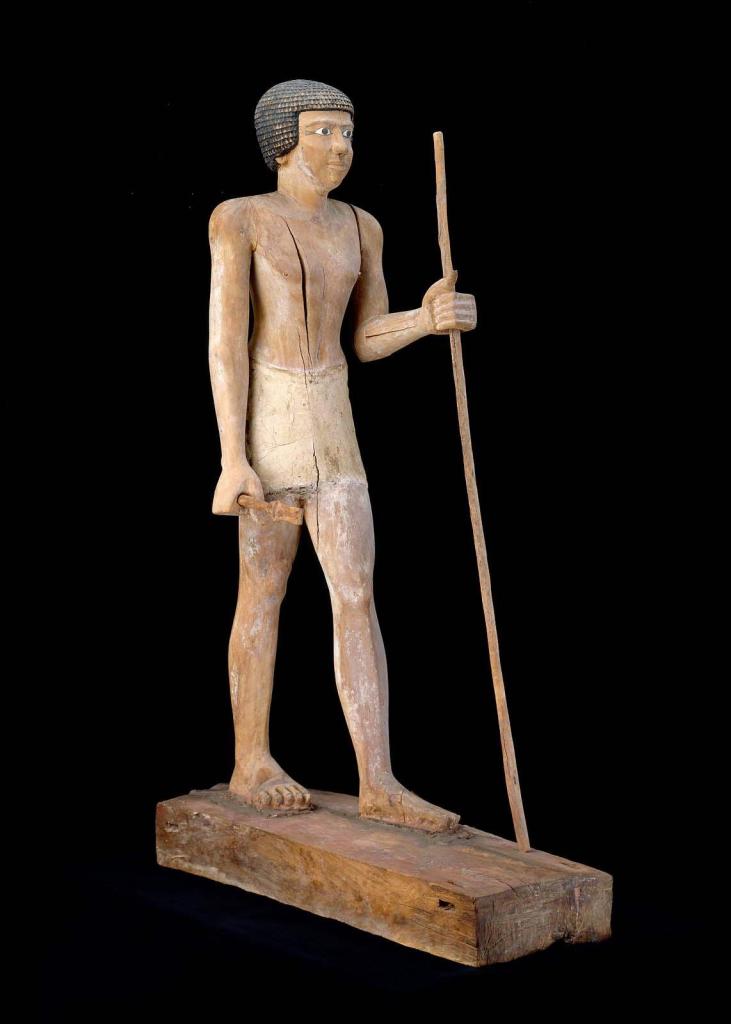
Statue of Wepwawetemhat
Period: First Intermediate to Middle Kingdom (c. 2140–1991 B.C.)
Material: Wood (well-preserved)
Provenance: Rock-cut tomb (exact date uncertain)
This finely crafted wooden statue depicts Wepwawetemhat and is considered one of the best-preserved sculptures of its period. Its stylistic features—including wide, staring eyes, long limbs and fingers, and angular facial and collarbone lines—reflect artistic traditions from the First Intermediate Period.
웨프와웨템하트 조각상
시대: 제1중간기~중왕국 시대 (기원전 2140년경~1991년)
소재: 목재 (보존 상태 양호)
출처: 암벽을 깎아 만든 무덤 (정확한 연대는 불확실)
이 정교하게 제작된 목조 조각상은 웨프와웨템하트를 묘사하며, 당시 조각상 중 가장 잘 보존된 것으로 손꼽힌다.
크고 응시하는 듯한 눈, 긴 팔다리와 손가락, 각진 얼굴과 쇄골 선 등 조각상의 양식적 특징은 제1중간기의 예술적 전통을 반영한다.
저 조각 정보를 소장처인 Museum of Fine Arts Boston 제공 정보를 통해 보강한다.
시대는 First Intermediate to Middle Kingdom, 아마도 2140–1991 B.C년 무렵이며 Findspot는 Egypt, Asyut, Tomb 14다.
Dimensions는 Length x width x height: 71.1 x 23.1 x 112 cm (28 x 9 1/8 x 44 1/8 in.)이다.
Accession Number는 04.1780이다.
제1중간기 말기 또는 중왕국 초기에 산 하급 관리 무덤을 위해 제작된 이 걸작 목조상은 고왕국 후기에 나타난 양식의 정점을 보여준다.
받침대에 적힌 간략한 문구는 이 조각상을 “숭배받는 자, 웨프와웨템하트the venerated one, Wepwawetemhat”라고 밝히며, 그는 왼발로 앞으로 성큼성큼 걸어가는 가늘고 이상적인 모습의 젊은이로 묘사한다.
이는 이집트 고관 조각상의 전통적인 자세다.
머리, 몸통, 다리는 나무 하나를 조각했으며, 팔과 받침대는 따로 제작했다.
조각상 전체는 석고로 코팅하고 밝은 색으로 칠했으며, 눈은 흑백 돌로 상감 세공했다.
살짝 아치형으로 뻗은 눈썹과 잘 보존된 눈을 포함한 얼굴 특징은 젊음의 강렬함과 에너지를 전달한다.
This statue is among the best-preserved wooden sculptures of its time. Its style retains certain features of the First Intermediate Period, including the wide, staring eyes, long limbs and fingers, and angular lines of the face and collarbone. The date of the unplundered rock-cut tomb in which this figure was discovered, however, remains uncertain. It was long thought to predate the reunification of Egypt in Dynasty 11, but a number of scholars now suggest that it and contemporary tombs may date from as late as Dynasty 12.
이 조각상은 당시 목조각 중 가장 잘 보존된 작품 중 하나다.
넓은 눈망울, 긴 팔다리와 손가락, 각진 얼굴과 쇄골 등 제1중간기 특징을 일부 간직한다.
그러나 이 조각상이 발견된 도굴되지 않은 암벽 무덤 연대는 불확실하다.
오랫동안 이집트 통일 11왕조 이전으로 여겨졌지만, 현재 많은 학자는 이 조각상과 동시대 무덤 연대가 12왕조 시대까지 거슬러 올라갈 수 있다고 주장한다.
아슈트Asyut 14번 무덤 출토.
1903년: 카이로 프랑스 동양고고학 연구소(Institut francais d’archeologie orientale)를 위해 에밀 가스통 샤시나(Emile Gaston Chassinat)와 샤를 팔랑크(Charles Palanque)가 발굴. 1904년: 알베르 M. 리스고(Albert M. Lythgoe)가 이집트미술관(MFA)을 위해 구입. (수집일: 1904년 1월 1일)
 HeriTrip.com
댓글 남기기