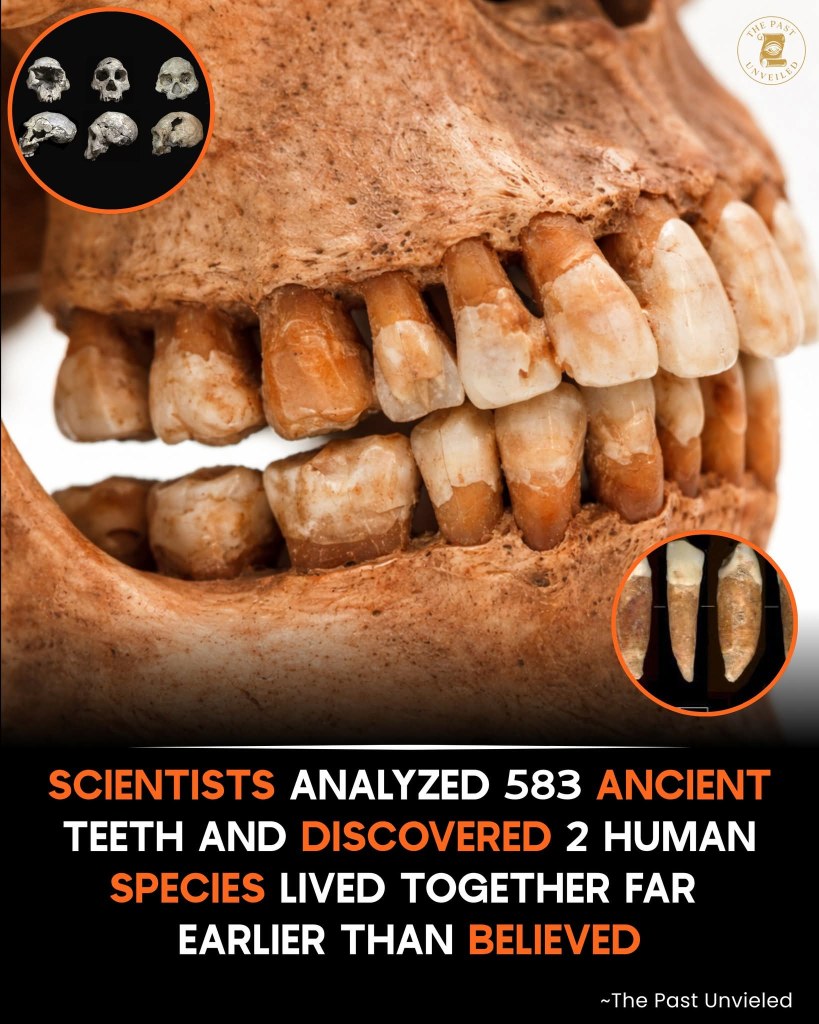
조지아 드마니시 호미니드 고고학 유적에서 발견된 583개 고대 치아를 연구한 고고학자들은 초기 인류 역사에 대한 오랜 생각을 도전하는 증거를 발견했다.
약 180만 년 전으로 거슬러 올라가는 이 화석들은 같은 장소에서 둘 이상의 인간 종이 나란히 살았음을 시사한다.
고급 통계 분석을 통해 연구자들은 치아 크기와 모양의 차이가 남성과 여성의 차이만으로는 설명될 수 없다는 것을 발견했다.
대신, 데이터는 적어도 두 개의 뚜렷한 인간 종이 존재하며, 이들은 호모 지오지쿠스와 호모 카우카시로 알려진 초기 형태일 가능성이 있으며, 동시에 풍경을 공유하고 있음을 뒷받침한다.
더욱 놀라운 것은 일부 치아가 훨씬 오래된 오스트랄로피스의 특징과 매우 흡사하여, 초기 인류의 아프리카 이주가 과학자들이 이전에 믿었던 것보다 더 일찍 시작되었을 가능성을 제기한다는 점이다.
이러한 발견들은 우리 조상들이 전 세계로 퍼져나간 이야기에 새로운 복잡성을 더한다.
Archaeologists studying 583 ancient teeth from the Dmanisi Hominid Archaeological Site in Georgia have uncovered evidence that challenges long-standing ideas about early human history. The fossils, dated to around 1.8 million years ago, suggest that more than one human species lived side by side at the same location.
Using advanced statistical analysis, researchers found that differences in tooth size and shape cannot be explained by male and female variation alone. Instead, the data supports the presence of at least two distinct human species, possibly early forms known as Homo georgicus and Homo caucasi, sharing the landscape at the same time.
Even more surprising, some teeth closely resemble much older australopith traits, raising the possibility that early human migrations out of Africa began earlier than scientists previously believed. These findings add a new layer of complexity to the story of how our ancestors spread across the world.
Source: Darren Orf, Popular Mechanics; Study published in PLOS One
Shared for informational/Educational purpose only
 HeriTrip.com
댓글 남기기