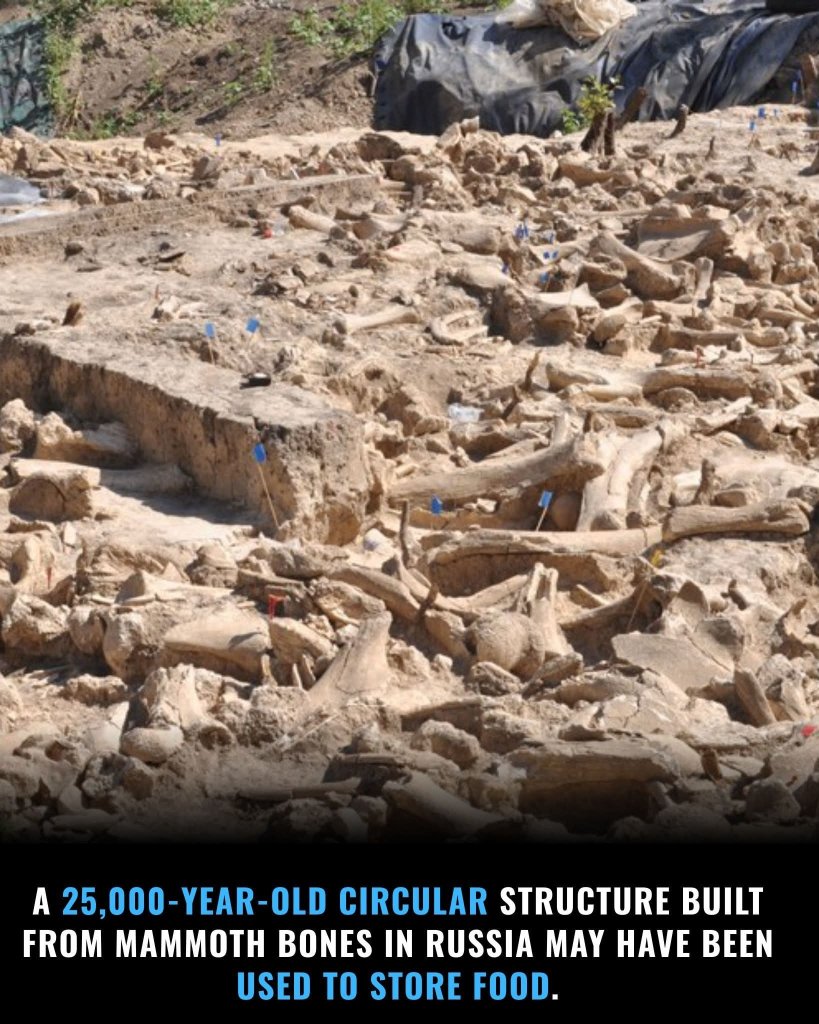
기록 보관소에서 빙하기 시대 사람들 놀라운 독창성을 엿볼 수 있는 유물이 발견되었다.
러시아 서부에서 고고학자들은 약 2만 5천 년 전으로 추정되는 매머드 뼈로 만든 원형 구조물을 발굴했다.
뼈 중 일부에는 지방과 연골의 흔적이 남아 있어, 비교적 신선한 상태일 때 의도적으로 선택하고 배열했음을 시사한다.
연구자들은 이 구조물이 주거지라기보다는 식량 저장고 역할을 하여 고기와 기타 자원을 포식 동물과 극한 환경으로부터 보호했을 것으로 추측한다.
구석기 시대 후기에 수렵 채집인들이 건설한 이 유적은 정교한 계획, 협력, 그리고 동물 자원에 대한 깊은 지식을 보여준다.
이러한 매머드 뼈 구조물은 빙하기 사회가 혹독한 기후에 어떻게 창의적으로 적응했는지, 그리고 생존뿐 아니라 어려운 선사 시대 환경에서 장기적인 자원 관리를 위해 이용 가능한 재료를 어떻게 활용했는지를 보여준다.
From the archives comes a remarkable glimpse into Ice Age ingenuity. In western Russia, archaeologists uncovered a circular structure constructed from mammoth bones dating back around 25,000 years.
Some of the bones still retained traces of fat and cartilage, suggesting they were deliberately selected and arranged while relatively fresh. Rather than serving as a dwelling, researchers believe the structure may have functioned as a food storage facility, protecting meat and other resources from scavengers and environmental extremes.
Built by hunter-gatherers during the Upper Paleolithic, the site demonstrates sophisticated planning, cooperation, and deep knowledge of animal resources. Such mammoth-bone constructions highlight how Ice Age communities adapted creatively to harsh climates, using available materials not only for survival, but for long-term resource management in a challenging prehistoric world.
 HeriTrip.com
댓글 남기기