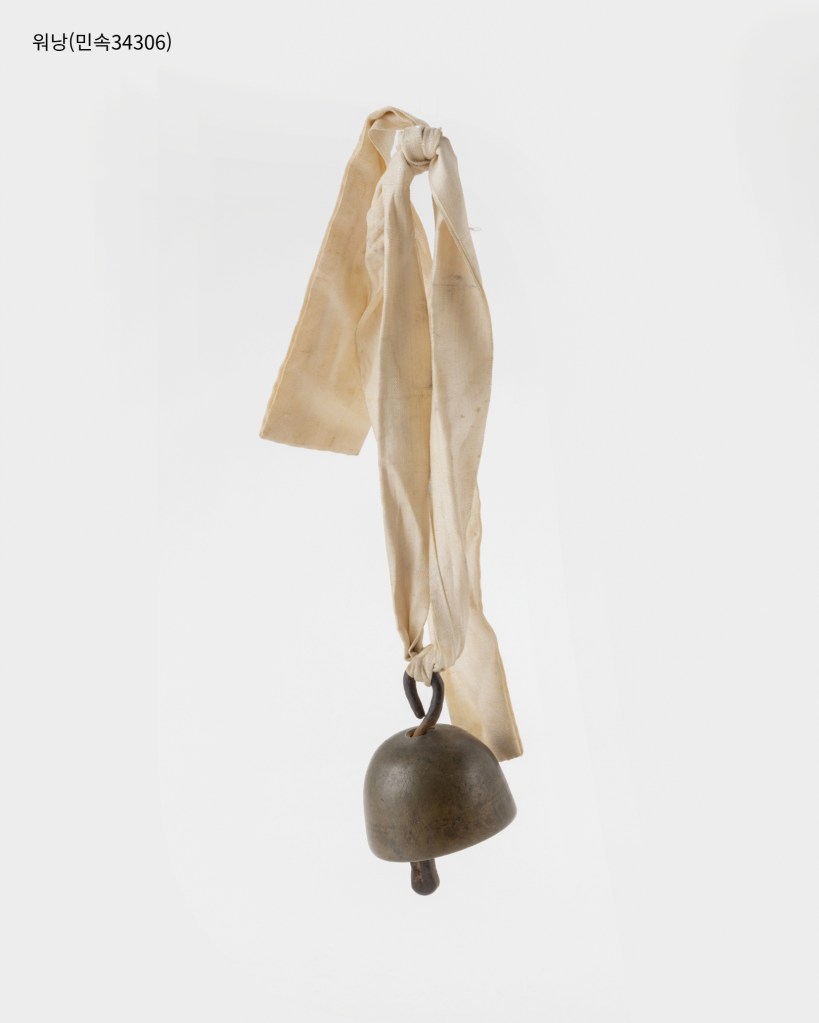
Wonang, The Little Bell That Connects Cows and Farmers.
Today, cows are viewed as animals that provide milk and meat. In the past, however, they were called saenggu(生口; living mouths to feed) and were cherished nearly as much as human family members.
Because cows were essential in agrarian society, people attached small metal bells called wonang to their necks. The origin of the word is unclear, but the sound of the name is quite endearing. It evokes the image of a farmer with a strong bond with his cows, guiding them with the familiar call of “wo-wo-.”
The traditional Korean cowbells, mainly made of brass, are small yet produce a clear, bright sound. They were hung under the cow’s neck or attached to each end of a yoke shaped like an inverted U. Each time the cow moved, the bell produced a tinkling sound, such as “jingle-jangle.” This helped farmers monitor the cows’ movements and location. The sound also helped deter predators like tigers and leopards that once inhabited the Korean Peninsula.
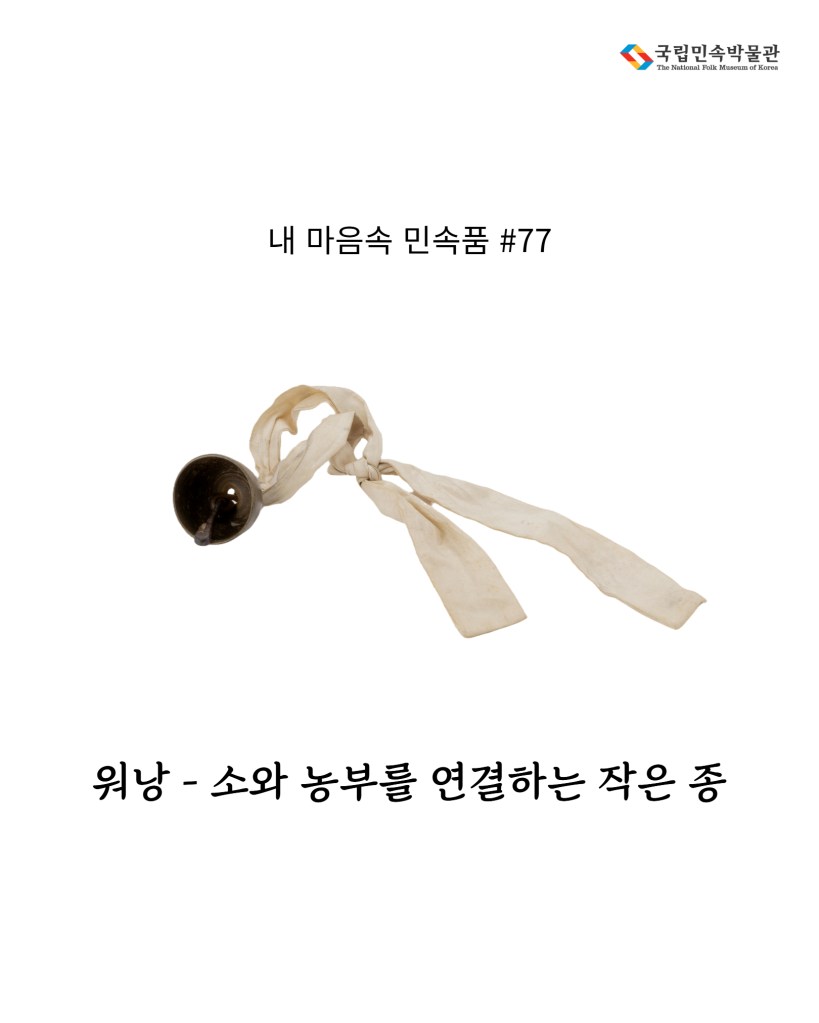
Since the 1980s, the sound of wonang has become rare as machinery replaced traditional farm labor. As agricultural equipment became widespread, many farmers sold their cows, as they were no longer needed. What might the farmers have thought the day they sold their cows? They may have felt both satisfaction from the sale and a sense of loss from the silence of the wonang. That’s why many farmers turn to drinking and smoking to cope with this bittersweet moment.
Although the wonang in the museum’s collection can no longer ring, I imagine the clear, metallic sound that once echoed with the cows’ footsteps.
Written by Youn Kyung-sik, Curator of the National Folk Museum of Korea
Artifact Information: Wonang (Cowbell) (Minsok34306)
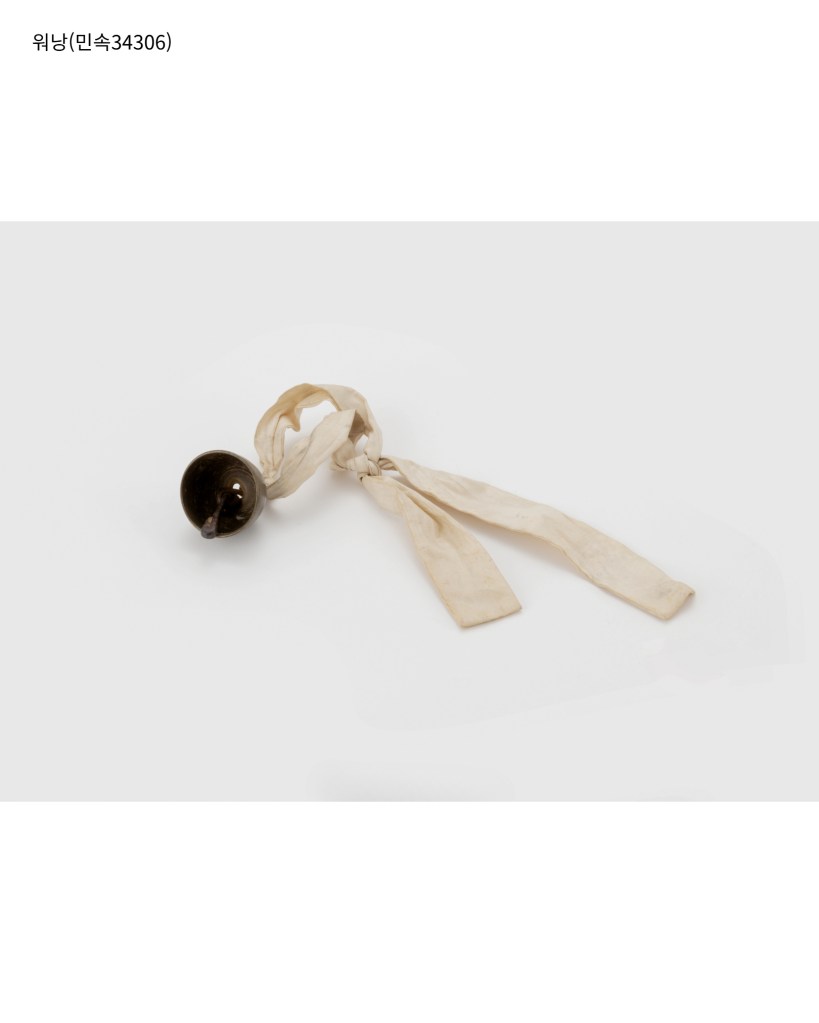
워낭-소와 농부를 연결하는 작은 종
오늘날의 소는 단순히 우유와 고기를 내어주는 동물로 인식되는 경향이 있습니다. 그러나 옛사람들은 소를 ‘생구(生口)’라고 부르며 사람과 같이 소중한 존재로 여겼습니다.
소는 농업사회에 중요한 동물이므로 사람들은 소의 목에 작은 쇠 종을 달아주었습니다. 이를 ‘워낭’이라고 합니다. 정확한 어원은 알려진 바 없지만, 어감이 상당히 정겹습니다. 워-워- 소몰이하면서 소와 함께 정을 나누는 듯한 느낌이 있습니다.
워낭은 주로 놋쇠로 만들었으며, 그 크기가 앙증맞고 소리가 맑은 것이 특징입니다. 소 목 아래에 달아주기도 하고, ‘∩’처럼 굽은 멍에 양쪽 끝에 하나씩 달아주기도 합니다. 소가 움직일 때마다 워낭은 ‘짤랑짤랑’ 소리를 냈습니다. 농부는 그 소리만으로도 소의 움직임과 위치를 대강 가늠해 볼 수 있었습니다. 그리고 워낭 소리는 한때 한반도에 서식했던 호랑이나 표범 등 맹수의 접근을 막는 데 도움이 되기도 했습니다.
1980년대 이후 워낭 소리를 듣기 힘들어졌습니다. 대부분의 농가에서 소 대신 농기계를 이용해 농사를 짓기 시작했기 때문입니다. 농기계가 보편화되면서 농부들은 일소를 팔았습니다. 더 이상 소를 키울 필요가 없기 때문입니다.
농부들은 소를 팔고 돌아오던 날, 무슨 생각을 했을까요? 큰돈을 얻었다는 기쁨과 소 없는 워낭의 허전함을 함께 느꼈을 것입니다. 그래서일까요? 소를 팔고 온 농부는 얼큰하게 술에 취해 담배 한 모금을 깊게 들이마셨던 것이 아닐까 합니다.
지금 박물관 수장고 속 워낭이 다시 소리를 내기 어렵지만, 소의 걸음에 맞춰 “짤랑짤랑” 울렸던 그 맑은 쇳소리를 상상해 봅니다.
글: 윤경식 국립민속박물관 학예연구사
소장품 정보: 워낭(민속34306)
 HeriTrip.com
댓글 남기기