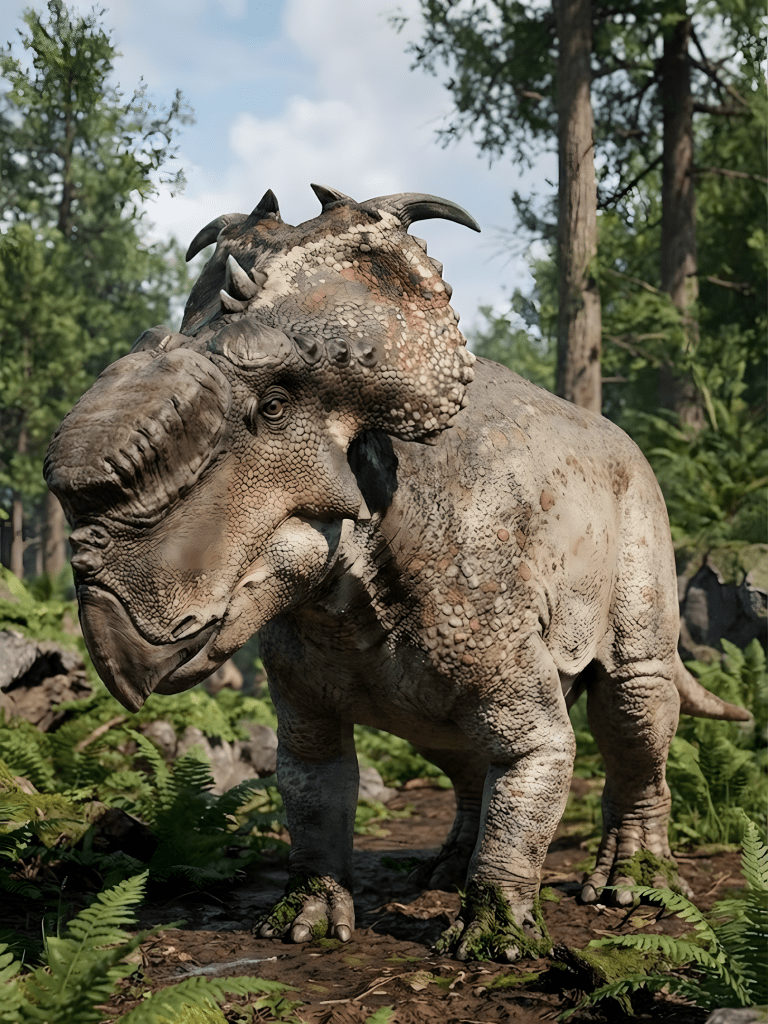
낮고 웅장한 굉음이 범람원 전체에 울려 퍼진다. 하늘에서 들려오는 소리가 아니라, 거대한 무리가 이동하는 소리다.
그 중심에는 백악기 후기 북아메리카에 산 4톤에 달하는 거대한 각룡류 공룡ceratopsian behemoth, 파키리노사우루스Pachyrhinosaurus가 있다.
마치 살아있는 공성추처battering ram럼 생긴 이 공룡의 가장 두드러진 특징은 뿔이 아니라 코에 달린 거대한 융합골boss of fused bone이다. 이 견고한 구조물은 밀치기, 과시, 그리고 동족과의 결투에 사용했을 것으로 추정한다.
파키리노사우루스는 단순히 두꺼운 두개골만 가진 공룡이 아니었다.
튼튼한 다리로 지탱하는 강력한 몸은 장거리 이동에 적합하여 먹이를 찾아 먼 곳을 이동할 수 있게 해주었다.
갈고리, 뿔, 가시 등 화려한 돌기들로 장식한 특유의 뼈로 된 목덜미 장식(종과 개체에 따라 형태가 매우 다양함)은 위압적인 모습을 과시하는 동시에 목을 보호하는 방패 역할을 했다.
거대한 몸집, 화려한 장식, 그리고 무리 지어 생활하는 사회적 본능이 결합되어 파키리노사우루스는 당대 가장 성공적이고 널리 퍼진 초식 공룡 중 하나가 되었다.
수천 마리 개체(어린 개체부터 거대한 성체까지)가 포함된 화석층에서 발견된 증거는 이 공룡이 거대하고 복잡한 무리를 이루어 살았음을 보여준다.
이러한 정교한 사회 구조는 알베르토사우루스Albertosaurus와 같은 강력한 포식자로부터 살아남는 데 중요한 역할을 했을 것으로 추정된다.
독특한 두개골 형태 덕분에 이 공룡은 뿔 달린 공룡의 놀라운 다양성과 진화, 그리고 마지막 시기를 이해하는 데 핵심적인 종이 되었다.
흥미로운 사실: 수십 년 동안 고생물학자들은 거대한 코뼈 돌기가 살아 생전에 부러지는 거대한 뿔의 밑동이라고 생각했다.
그러나 성장 단계를 연구한 결과, 이 뼈는 처음부터 평평하거나 둥근 형태를 하고 있었다는 것이 밝혀졌다.
페로토룸P. perotorum과 같은 일부 종에서는 이 돌기가 성체가 되면서 두 개의 뒤로 휘어진 뿔로 갈라져, 알려진 공룡 중 가장 역동적인 장식을 가진 공룡 중 하나가 되었다.
A low, resonant rumble echoes across the floodplain, not from the sky, but from a massive, moving herd. At its heart is Pachyrhinosaurus, a four-ton ceratopsian behemoth of Late Cretaceous North America, built like a living battering ram. Its most defining feature is not a horn, but a colossal, boss of fused bone on its nose—a rugged platform used for shoving, display, and perhaps head-to-head combat with its own kind.
Pachyrhinosaurus was more than just a thick skull. Its powerful body, supported by stout limbs, was built for endurance, allowing it to undertake long migrations between feeding grounds. Its signature bony frill, adorned with a spectacular array of hooks, horns, and spikes (which varied wildly between species and even individuals), served as both a formidable visual display and a shield for its neck. This combination of mass, ornamentation, and social herding instinct made Pachyrhinosaurus one of the most successful and widespread herbivores of its time.
Fossil evidence from bonebeds containing thousands of individuals—from juveniles to enormous adults—reveals that this dinosaur lived in vast, complex herds. This profound social structure was likely key to its survival against formidable predators like Albertosaurus. Its distinctive skull morphology has made it a key species for understanding the incredible diversity and evolution of the “horned dinosaurs” in their final chapters.
Strange fact: For decades, paleontologists assumed the giant nasal boss was the base for a huge horn that broke off during life. However, study of growth stages shows the bone formed a flat or rounded platform from the start. In some species, like P. perotorum, this boss split in adulthood to form two separate, backward-curving horns, making it one of the most dynamically ornamented dinosaurs known.
 HeriTrip.com
댓글 남기기