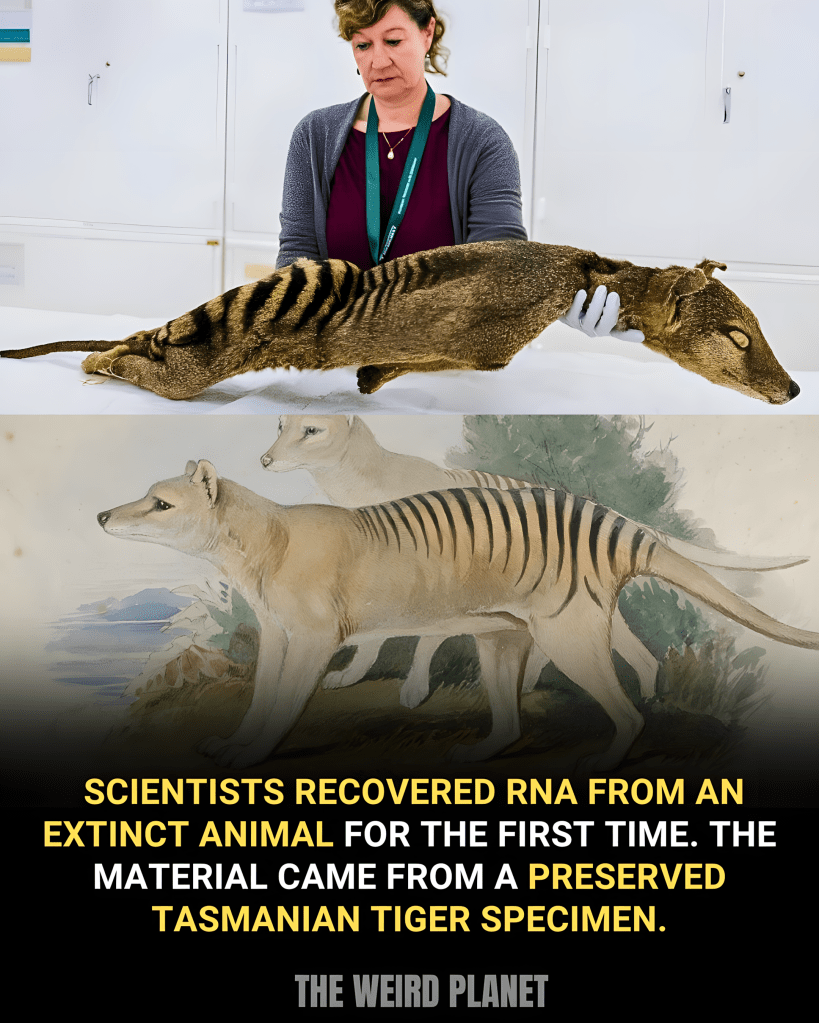
2023년, 과학자들이 멸종한 태즈메이니아 호랑이Tasmanian tiger의 RNA를 복원하고 염기서열을 분석하는 데 성공했다.
이는 멸종된 동물에서 RNA를 얻은 최초 사례였다. 해당 RNA는 건조한 환경에 보관된 130년 된 박물관 표본에서 추출되었다.
RNA는 DNA보다 훨씬 불안정해 보통 사후 얼마 지나지 않아 분해된다.
하지만 이 경우에는 작은 RNA 조각들이 현대 기술을 사용하여 식별, 검증 및 염기서열 분석이 가능할 만큼 오랫동안 보존되었다.
어떤 유전자가 존재하는지를 보여주는 DNA와 달리, RNA는 어떤 유전자가 활발하게 기능했는지를 보여준다.
분석 결과, 근육과 피부 조직에서 발견된 유전자 활동 패턴은 살아있는 동물 패턴과 매우 유사했다.
이 연구는 또한 조절 RNA 분자regulatory RNA molecules를 식별하고 태즈메이니아 호랑이 게놈 참조 서열을 더욱 정밀하게 다듬었다.
연구진은 심지어 고대 RNA 바이러스와 일치하는 흔적까지 발견했다.
이 획기적인 연구는 유전학적 분석뿐 아니라 보존된 유전자 활동을 통해 멸종된 생명체를 연구하는 새로운 분야인 고생물학 및 전사체학을 확립했다.
흥미로운 사실: 태즈메이니아 호랑이는 1936년에 멸종했으며, 마지막으로 알려진 개체는 사육 상태에서 죽었다.
In 2023, researchers successfully recovered and sequenced RNA from the Tasmanian tiger, marking the first time RNA had ever been obtained from an extinct animal. The material came from a 130 year old museum specimen stored under dry conditions.
RNA is far less stable than DNA and usually degrades shortly after death. In this case, small RNA fragments survived long enough to be identified, authenticated, and sequenced using modern techniques.
Unlike DNA, which shows which genes exist, RNA reveals which genes were actively functioning.
Analysis showed gene activity patterns in muscle and skin tissue that closely matched those of living animals.
The study also identified regulatory RNA molecules and refined the thylacine genome reference.
Researchers even detected traces consistent with ancient RNA viruses.
This breakthrough established paleotranscriptomics, a new field that studies extinct life through preserved gene activity rather than genetics alone.
Interesting Fact: The Tasmanian tiger went extinct in 1936, with the last known individual dying in captivity.
 HeriTrip.com
댓글 남기기