획기적인 유전학 연구가 고대 아나톨리아에서 누가 권력을 쥐고 있었는지에 대한 우리의 이해를 새롭게 바꿔놓았다.
중부 아나톨리아 신석기 시대 정착지인 차탈회위크Çatalhöyük는 오랫동안 고고학자들 관심이었으며, 한때는 이곳이 모계 사회matriarchal society였을 것이라는 추측이 제기되기도 했다.
초기 해석은 여성적 특징을 과장한 조각상들에 초점을 맞추었는데, 이는 풍요의 여신fertility goddesses을 묘사한 것으로 간주됐으며, 어쩌면 “어머니 여신mother goddess” 숭배와 관련이 있을 수도 있다고 추측하기도 했다.
그러나 최근까지 여성들이 공동체 내에서 더 높은 지위를 차지했다는 확실한 증거는 없었다.
중동공과대학교 연구팀이 주도한 이 대규모 프로젝트는 35채 가옥에 묻힌 131명 유골에서 DNA를 분석하여, 잘 보존된 측두골과 치아 덕분에 처음으로 아이들의 생물학적 성별을 밝혀냈다.
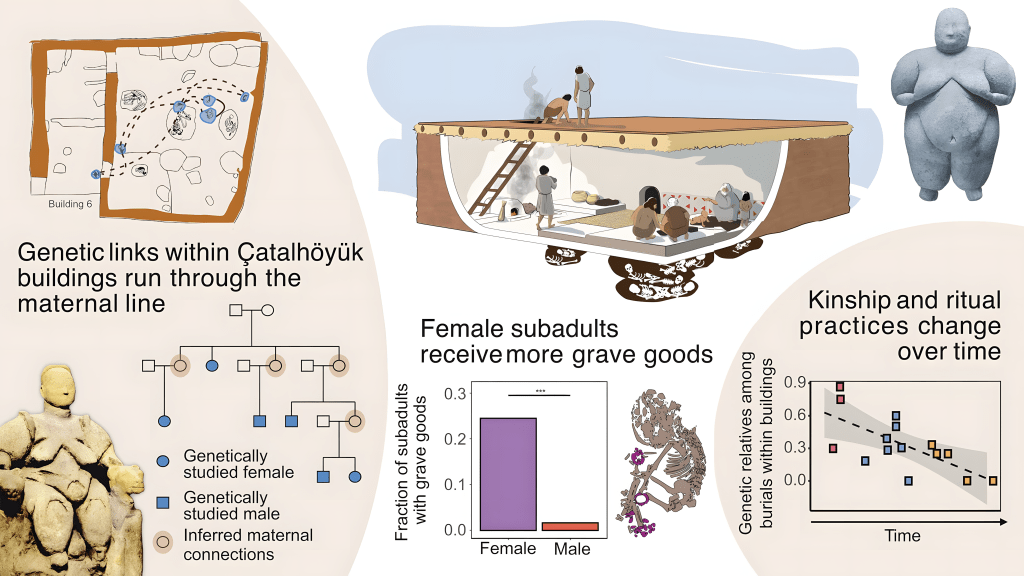
그 결과는 놀라웠다. 여아는 남아보다 부장품과 함께 묻힐 확률이 다섯 배나 높았다.
이 연구는 또한 같은 집에 묻힌 사람들이 일반적으로 모계 혈연관계로 연결된다는 사실을 발견했는데, 이는 여성들은 자신의 가구에 남아 있었던 반면 남성들은 배우자의 가족에 합류하기 위해 이동했음을 시사한다.
이러한 패턴은 여성 중심적인 사회 구조가 차탈회위크의 일상생활과 공동체 조직을 형성했으며, 사회 계층화를 줄여 보다 평등한 공동체를 유지하는 데 도움이 되었을 가능성을 암시한다.
연구진은 유전자 분석 결과를 고고학 및 생물고고학 데이터 세트와 결합하여 친족 관계 관행이 시간이 지남에 따라 진화했음에도 모계 연결에 대한 강조와 여아에 대한 우대 관행이 1,000년 이상 지속되었음을 발견했다.
이러한 통찰은 세계에서 가장 상징적인 신석기 시대 공동체 중 하나의 사회 역학을 밝혀줄 뿐만 아니라 초기 농경 사회의 성별, 이동성 및 권력에 대한 오랜 가정에 도전한다.
Science 26 Jun 2025 Vol 388, Issue 6754 DOI: 10.1126/science.adr2915
***
저런 결과가 나왔다 해서 그 사회가 진짜 여성들이 주도권을 틀어쥔 사회였는가는 다시 생각해야 한다.
저 시스템 실은 사자왕국과 똑같다. 숫사자들은 다 외부에서 들어오며, 숫놈 숫자는 한두 마리에 지나지 않는다. 그렇다고 저 사회를 암놈사회라 하는가?
이른바 모계제 사회 역시 마찬가지여서, 남자가 개털 취급받은 사회는 아니었다. 권력은 여전히 소수 남자가 틀어쥐었다.
A ground-breaking genetic study has helped reshape our understanding of who held power in ancient Anatolia.
The Neolithic settlement of Çatalhöyük has long fascinated archaeologists, who once speculated that it might represent a matriarchal society. Early interpretations focused on figurines with exaggerated female features, thought to depict fertility goddesses and possibly linked to “mother goddess” cults. However, until recently, there was no firm evidence that women held a higher status within the community.
This large-scale project, led by a team from Middle East Technical University, analysed DNA from 131 individuals buried in 35 houses, identifying the biological sex of children for the first time, thanks to well-preserved petrous bones and teeth. Their results were striking- female babies and children were five times more likely to be buried with grave goods than males.
The study also found that those buried in the same house were typically related through maternal lines, suggesting women remained connected to their households while men moved to join their partners’ families. This pattern implies that female-centred social structures shaped daily life and community organisation at Çatalhöyük and may have helped maintain a more egalitarian community by reducing social stratification.
When researchers combined the genetic results with archaeological and bioarchaeological datasets, they found that although kinship practices evolved over time, the emphasis on maternal connections and the preferential treatment of female children persisted for over 1,000 years. These insights not only illuminate the social dynamics of one of the world’s most iconic Neolithic communities but also challenge long-held assumptions about gender, mobility, and power in early farming societies.
 HeriTrip.com
댓글 남기기