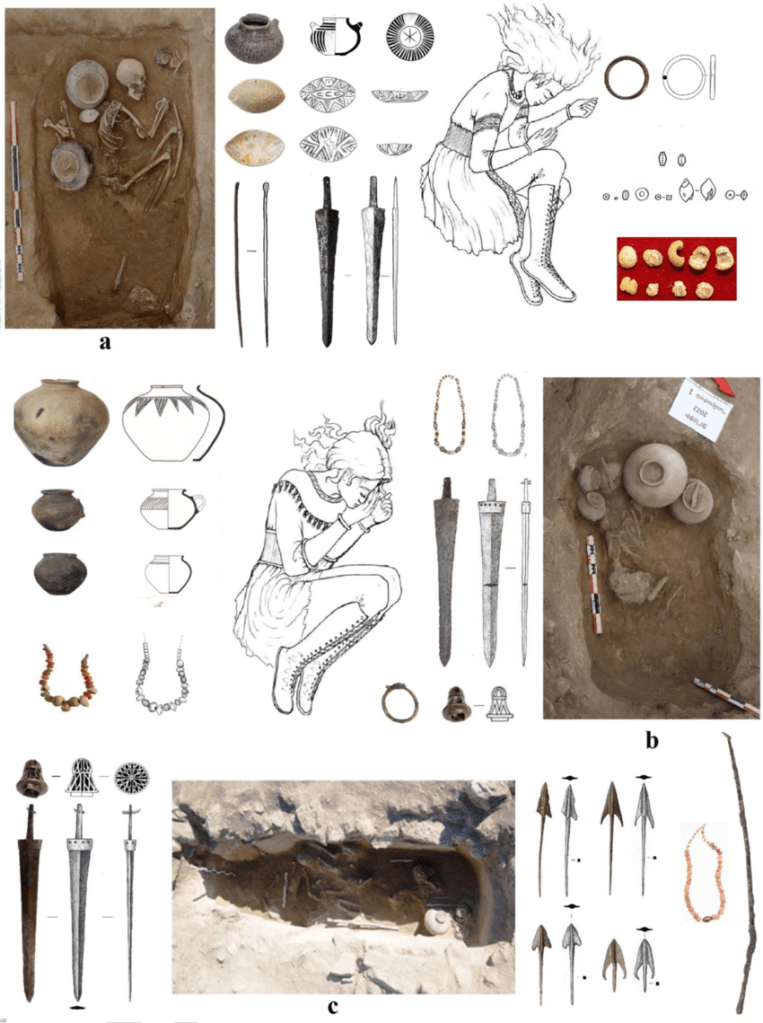
Burials of female warriors, Jrapi, Shirak, Armenia from 8th to 6 BC.
Anahit Yu. Khudaverdyan’s article
*****
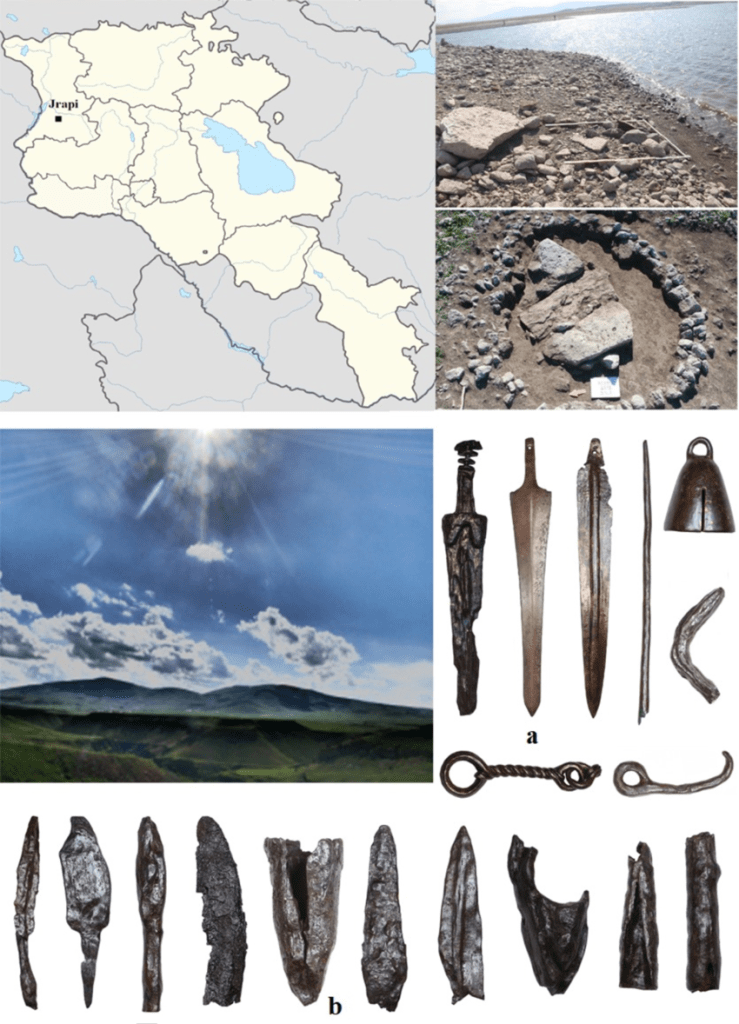
Late Iron Age female warriors from Jrapi cemetery (Armenia, Shirak province) (bioarchaeological studies). Mankind Quarterly (London), 2024. Vol. 64(4), pp. 1-19.
June 2024 Mankind Quarterly 64(4):1-19
DOI:10.46469/mq.2024.64.4.9
Authors: Anahit Yu. Khudaverdyan, Institute of Archaeology and Ethnography
Abstract
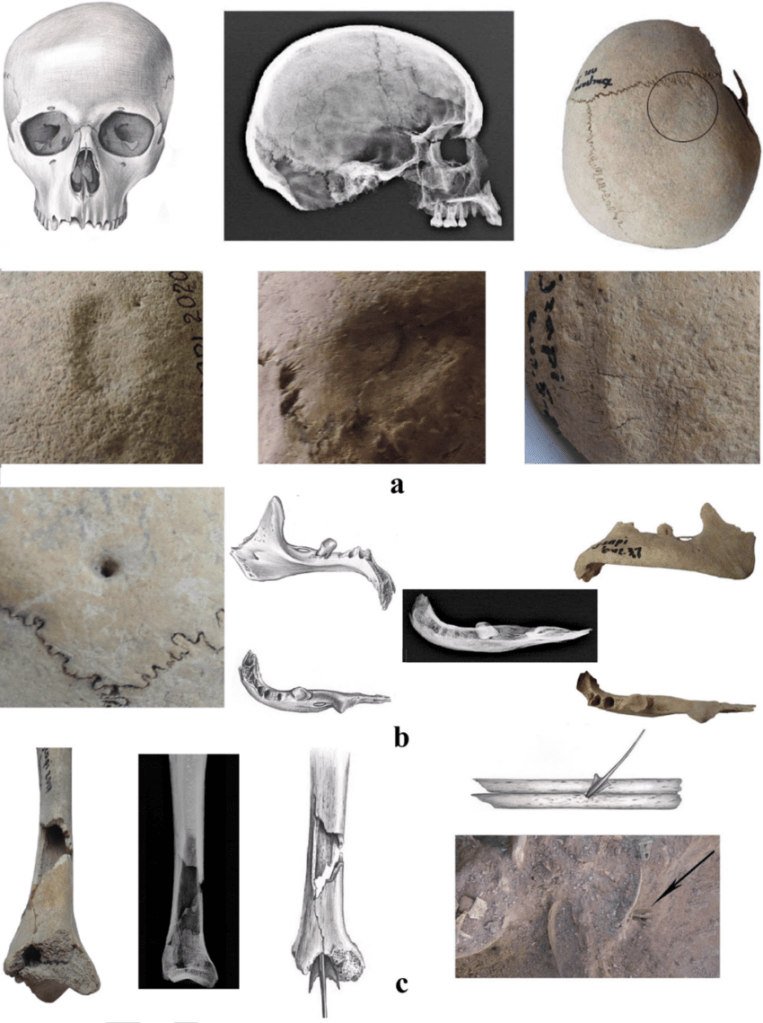
Since ancient times, women have been seen primarily as keepers of the home, but this has not prevented them from showing courage throughout history. Most often, women took part in battles when their home, territory or country was attacked. Anthropological material was obtained from the Jrapi cemetery as a result of the 2013-2022 rescue archaeological work in northwestern Armenia (Shirak Province). The female burials from the 8th to 6th century BC in the cemetery contained weapons. The anthropological study used a combination of visual inspection and radiography. The article lists the types of injuries found in the skeletal bones of the women. The consequences of the trauma suffered by the women are presented as antemortem and perimortem injuries. Their nature (head injuries, arrow and weapon wounds) indicate a violent event that led to serious injury or death of these women. These data provide evidence of the paramilitary nature of the local population.
아르메니아 시라크 주 즈라피 공동묘지에서 발견된 후기 철기 시대 여성 전사 (생물고고학 연구). Mankind Quarterly (런던), 2024. Vol. 64(4), pp. 1-19.
2024년 6월 Mankind Quarterly 64(4):1-19
DOI:10.46469/mq.2024.64.4.9
저자: 아나히트 유. 후다베르디안, 고고학 및 민족학 연구소
요약
기원전 8세기부터 6세기까지 아르메니아 시라크 주라피에서 발견된 여성 전사들의 매장 유적
고대부터 여성은 주로 가정의 수호자로 여겨졌지만, 역사 전반에 걸쳐 용기를 보여준 적도 있다.
여성들은 집, 영토 또는 국가가 공격받을 때 전투에 참여하는 경우가 많았다.
본 연구에서는 2013년부터 2022년까지 아르메니아 북서부(시라크 주)에서 진행된 긴급 발굴 조사 결과 즈라피 공동묘지에서 인류학적 자료를 수집했다.
기원전 8세기부터 6세기까지의 여성 매장지에서는 무기가 함께 발견되었다.
인류학 연구에서는 육안 검사와 방사선 촬영을 병행했다.
이 논문은 여성 유골에서 발견된 부상 유형을 나열한다.
여성들이 겪은 외상의 결과는 생전 및 생중계 손상으로 구분된다.
이러한 손상(두부 손상, 화살 및 무기에 의한 상처)은 이 여성들이 심각한 부상이나 사망에 이르게 한 폭력적인 사건을 시사한다.
이러한 자료는 해당 지역 주민들이 준군사적인 성향을 가졌음을 보여주는 증거가 된다.
Conclusion
Since time immemorial, women’s role has been that of the keeper of the home, but this has not been anobstacle to their courageous actions throughout history. Women were most often part of the fighting forcewhen their home, territory or country was under attack. Excavations at the Jrapi necropolis (2013-2022)have found various types of weapons in all male and female burials from the 8th to the 6th century BC:bronze or iron daggers, arrowheads and spearheads. Some male burials (in particular 2018: burial 1) wereaccompanied by a full set of defensive and offensive weapons. The anthropological and archaeologicalmaterial from the men’s graves is currently being studied. Traces of combat, including wounds from arrowsand cold weapons, have also been documented on female skeletons from Jrapi burial sites. The level ofcombat trauma in the group is described as ‘high’, characteristic of societies that have been regularlyinvolved in military action
결론
태초부터 여성의 역할은 가정의 수호자였지만, 이는 역사 속에서 여성의 용감한 행동을 가로막는 장애물이 되지는 않았다.
여성들은 집, 영토 또는 국가가 공격받을 때 전투에 적극적으로 참여하는 경우가 많았다.
2013년부터 2022년까지 진행된 즈라피 공동묘지 발굴 조사에서는 기원전 8세기부터 6세기까지의 남녀 유골에서 청동 또는 철제 단검, 화살촉, 창촉 등 다양한 무기가 발견되었다.
특히 2018년에 발굴된 1번 유골에서는 방어 및 공격용 무기가 모두 함께 출토되었다.
남성 유골에서 발굴된 인류학적 및 고고학적 자료는 현재 연구 중이다.
즈라피 매장지에서 발견된 여성 유골에서는 화살과 냉병기에 의한 상처를 포함한 전투 흔적도 확인되었다.
해당 집단의 전투 외상 수준은 ‘높음’으로 묘사되며, 이는 정기적으로 군사 행동에 참여해 온 사회에서 흔히 나타나는 특징이다.
 HeriTrip.com
댓글 남기기