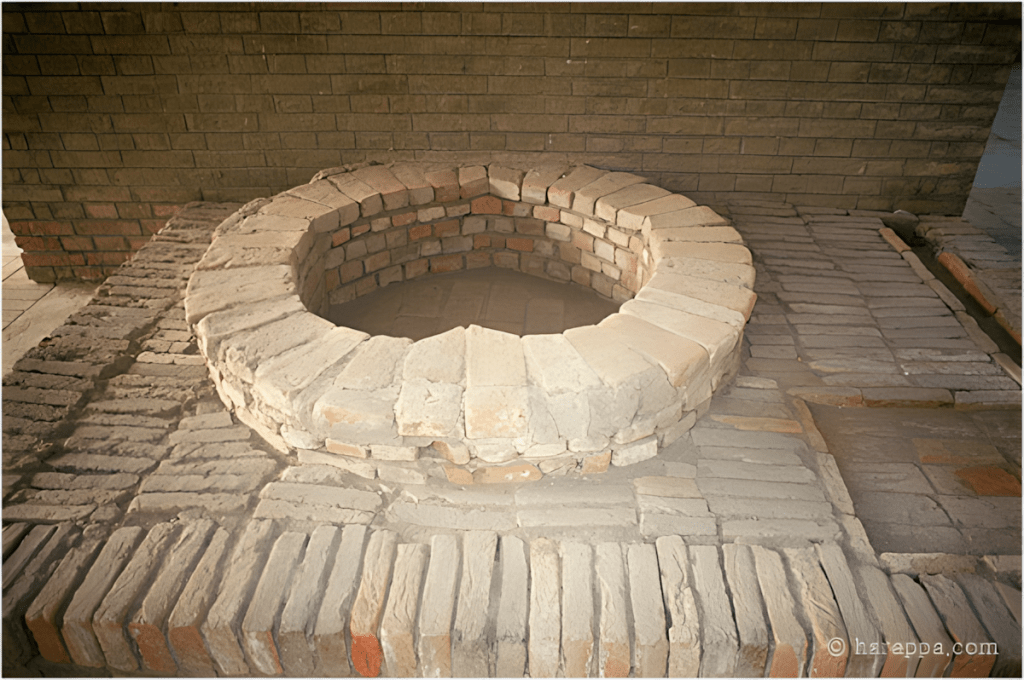
Mohenjo-daro, City of Wells II.
“Remarkable as it may seem, the [700 estimated] well locations at Mohenjo-daro seem to have been laid out when the original platforms were built and were maintained over the history of the city with almost no changes.
Some were abandoned, but we know of no wells newly sited and constructed after the initial platform building,” writes Dr. Gregory Possehl, which he sees as supporting the contention of another archaeologist, Dr. Michael Jansen, that the wells locations throughout the city were planned from the beginning.
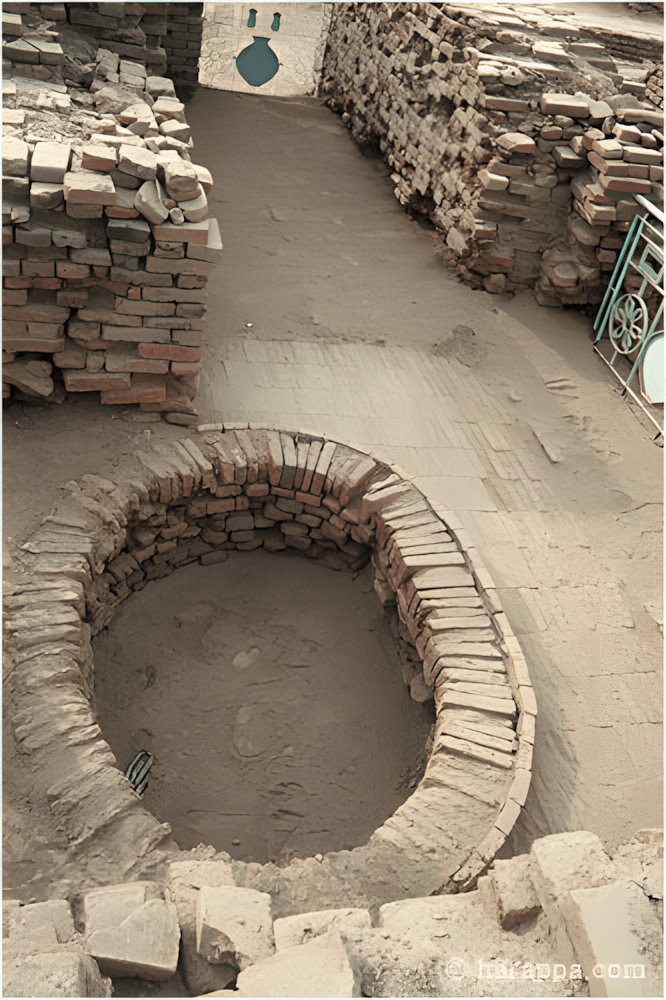
“Wells are lined for two reasons. First the bricks support the earth and guard against cave-ins and erosion, especially of the well opening. Brick-lined wells also deliver clean, sweet water with a minimum of silt and other large particle-contaminants.. Properly dug and maintained brick-lined wells can deliver perfectly clear water, even on a river floodplain.”
He continues: “The area served by each well and the mean distance between wells is remarkably consistent in the Lower Town; another reflection of the planning that went into Mohenjo-daro from the very beginning. A few wells were abandoned during the life of the city. [Excavator Ernest] Mackay suggests that this took place because someone jumped into them.”
(Gregory Possehl, The Indus Civilization: A Contemporary Perspective, p. 101).
- Pipal-leaf shaped well, Lower Town
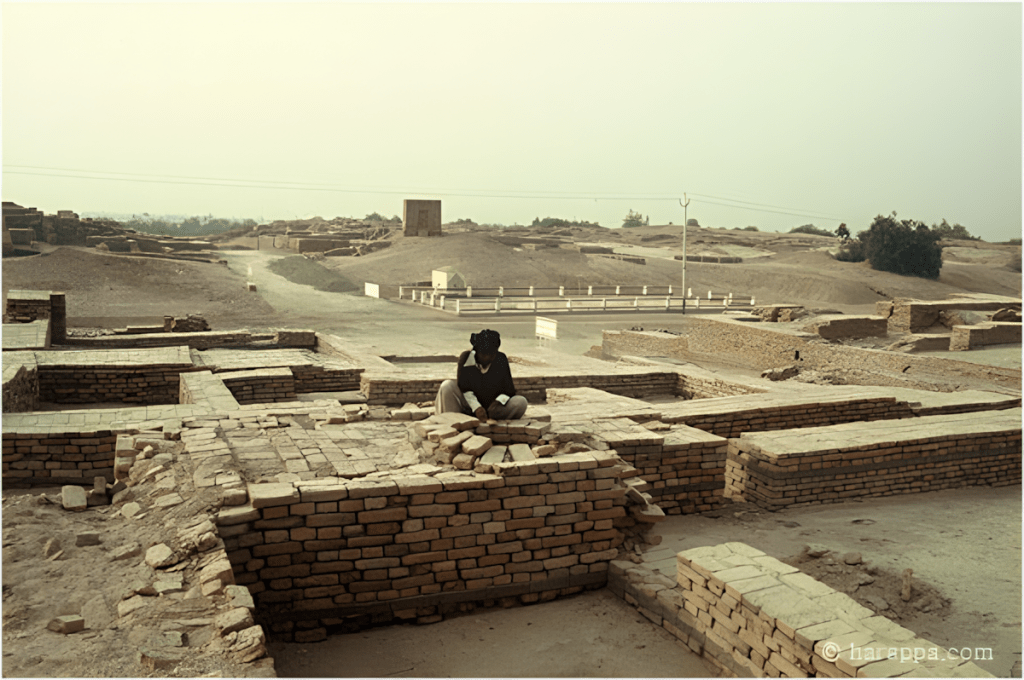
- Oval Well, SD Area
- Small well and platform, VS Area
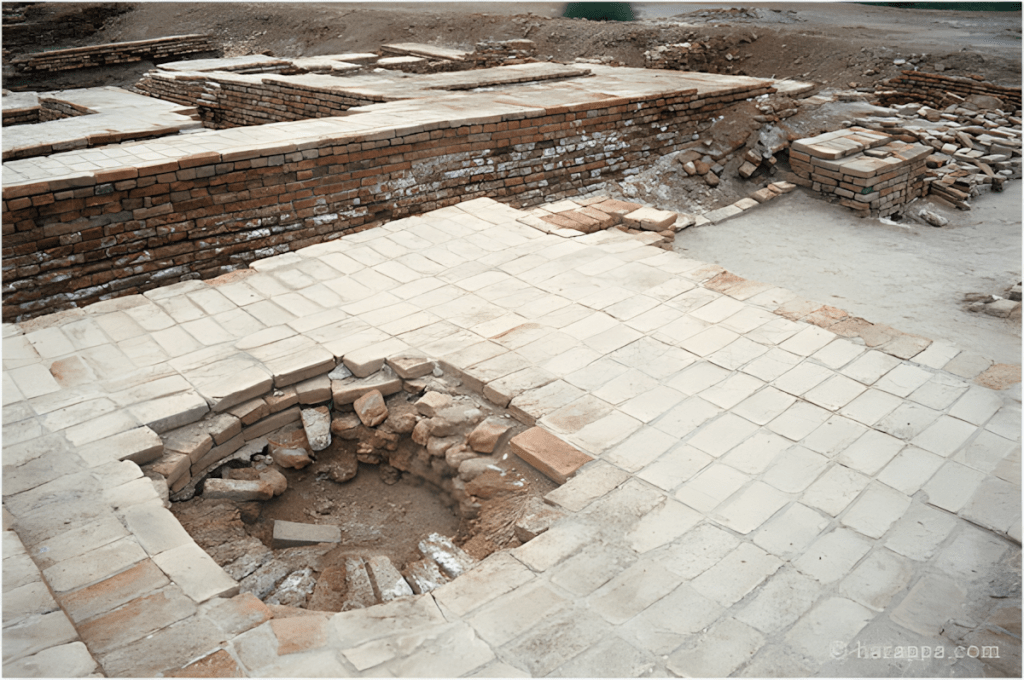
- Well surrounded by paving, DK-B area
모헨조다로Mohenjo-daro, 우물의 도시City of Wells II.
“놀랍게도 모헨조다로의 [추정치 700개] 우물 위치는 최초 플랫폼이 건설될 때 계획되었고, 도시의 역사 동안 거의 변화 없이 유지된 것으로 보인다. 일부는 버려졌지만, 최초 플랫폼 건설 이후 새로 건설된 우물은 없는 것으로 알려졌다”고 그레고리 포셀 박사는 썼다.
그는 이것이 도시 전체의 우물 위치가 처음부터 계획되었다는 또 다른 고고학자 마이클 얀센 박사의 주장을 뒷받침한다고 본다.
“우물에 벽돌을 쌓는 데에는 두 가지 이유가 있다. 첫째, 벽돌은 흙을 지탱하고 붕괴와 침식을 방지하며, 특히 우물 입구를 보호한다. 벽돌로 마감한 우물은 또한 침전물과 기타 큰 입자 오염 물질이 최소화된 깨끗하고 담수화된 물을 제공한다. 제대로 파고 관리된 벽돌 우물은 강 범람원에서도 완벽하게 맑은 물을 제공할 수 있다.”
그는 다음과 같이 덧붙인다.
“하부 도시에서는 각 우물이 담당하는 지역과 우물 사이의 평균 거리가 놀라울 정도로 일정하다.
이는 모헨조다로가 처음부터 계획적으로 건설되었음을 보여주는 또 다른 증거다.
도시가 존속하는 동안 몇몇 우물은 버려졌다. [발굴자 어니스트] 맥케이는 누군가가 그 우물에 뛰어들었기 때문이라고 추측한다.”
(그레고리 포셀, 『인더스 문명: 현대적 관점』, 101쪽).
Gregory Possehl, The Indus Civilization: A Contemporary Perspective, p. 101.
포장도로로 둘러싸인 우물, DK-B 지역
보리수 잎 모양 우물, 하부 도시
타원형 우물, SD 지역
작은 우물과 단상, VS 지역
 HeriTrip.com
댓글 남기기