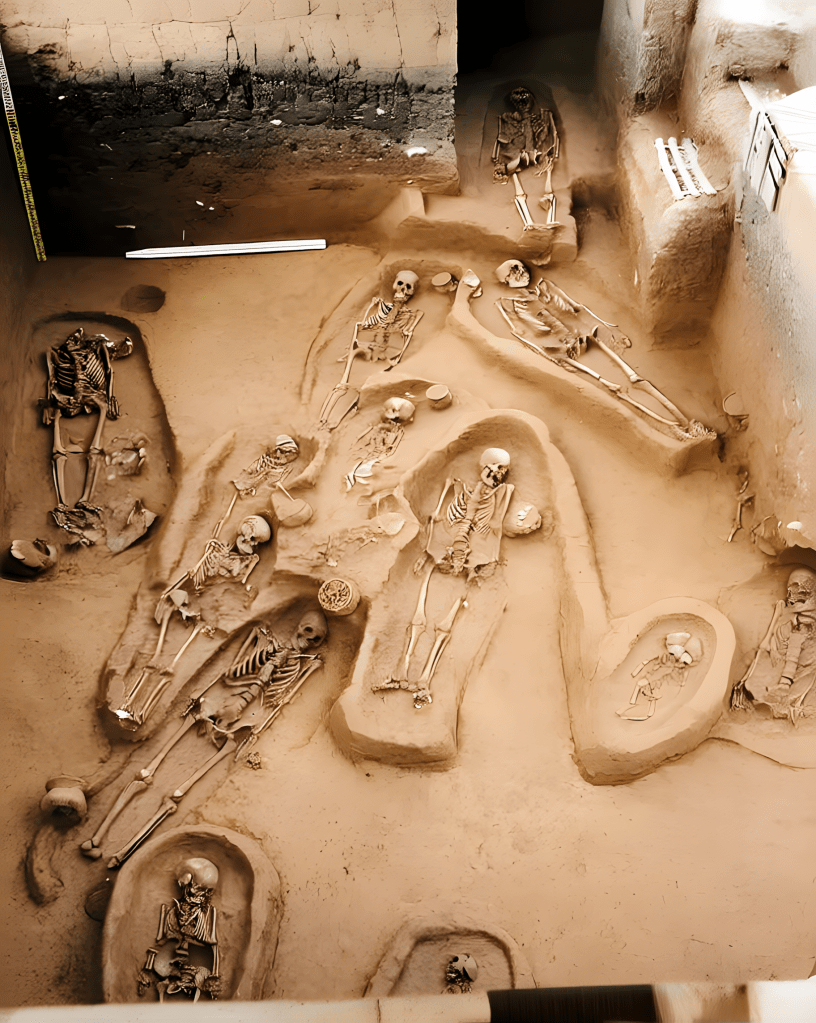
The Man Bac archaeological site in Vietnam, particularly Burial 9, offers valuable insights into the existence of ancient Southeast Asian societies around 1500-1000 BC.
This burial, which is part of a more extensive Neolithic settlement, showcases a fusion of characteristics from indigenous groups and newcomers, probably hailing from southern China.
The skeletal remains provide information about their nutrition, well-being, and the ways in which these distinct communities interacted and blended.
It serves as a fascinating illustration of the cultural exchanges occurring between hunter-gatherers and agricultural societies long before any written records were created.
베트남 만박Man Bac 고고학 유적, 특히 그 9번 매장지는 기원전 1500년에서 기원전 1000년 무렵 고대 동남아시아 사회의 존재에 대한 귀중한 통찰을 제공한다.
더 광범위한 신석기 시대 정착지 일부인 이 매장지는 토착민과 아마도 중국 남부에서 온 이주민들 특징이 융합된 모습을 보여준다.
유골을 통해 당시 사람들의 영양 상태, 생활 방식, 그리고 서로 다른 공동체들이 어떻게 상호작용하고 융합되었는지에 대한 정보를 얻을 수 있다.
이는 문자 기록이 만들어지기 훨씬 이전 시대에 수렵채집 사회와 농경 사회 사이에 일어난 문화 교류를 보여주는 흥미로운 사례다.
 HeriTrip.com
댓글 남기기