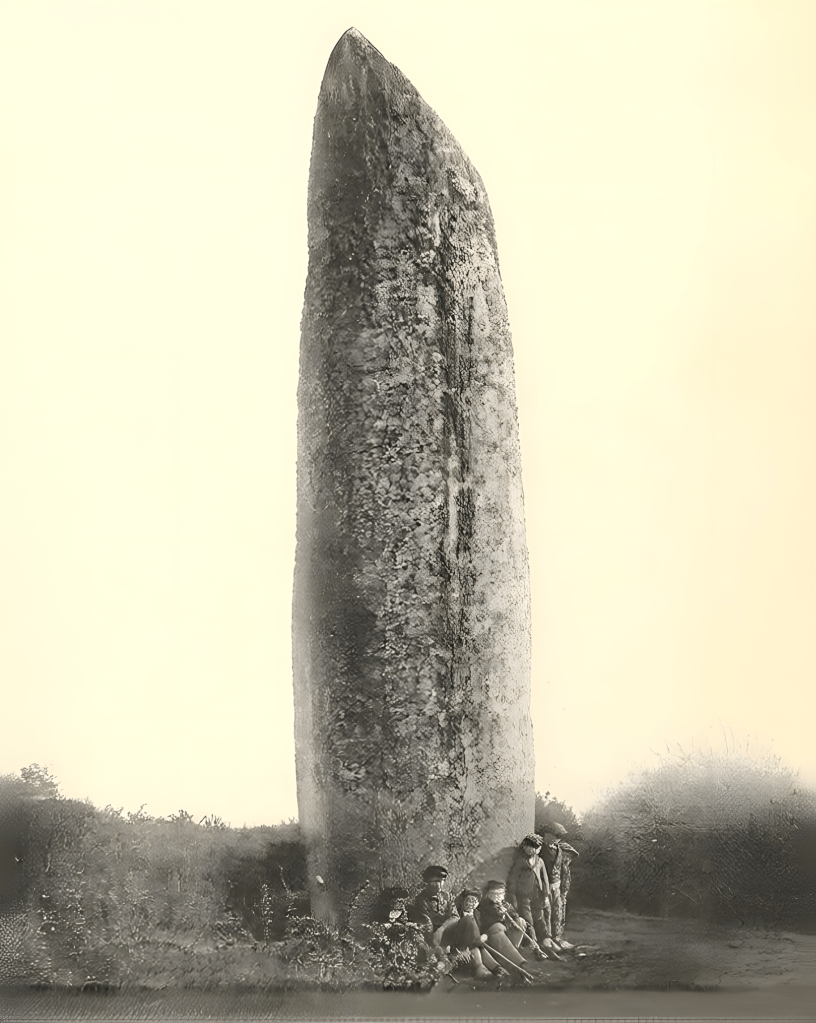
For over five millennia, the Menhir of Kerloas, located in Plouarzel, France, holds the title of the tallest menhir on the planet.
This granite monolith stands at a height of 9.5 meters (31 feet) above the surface, with an additional 2 meters (6.5 feet) embedded underground, weighing an impressive 100 tons.
Its surfaces exhibit a level of shaping and polishing that suggests the skills of an ancient civilization whose identity remains a mystery.
At the lower section of the stone, two elevated knobs are thought to have played a role in fertility and marriage ceremonies.
Yet, the method by which Neolithic people managed to transport and erect such a massive stone without the benefit of modern tools poses a fascinating question.
This ancient artifact continues to evoke intrigue, leaving its true significance veiled in obscurity.
프랑스 플루아르젤에 위치한 케를로아스 거석은 5천 년이 넘는 세월 동안 지구상에서 가장 높은 거석이라는 타이틀을 지킨다.
이 화강암 거석은 지표면에서 9.5미터(31피트) 높이로 솟아 있으며, 추가로 2미터(6.5피트)는 땅속에 묻혀 있고, 무게는 무려 100톤에 달한다.
표면에는 정교한 조각과 연마 기술이 돋보이는데, 이는 그 정체가 여전히 수수께끼로 남아 있는 고대 문명의 솜씨를 짐작케 한다.
돌 아랫부분에는 두 개 솟아오른 돌기가 있는데, 이는 다산과 결혼 의식과 관련된 역할을 했을 것으로 추정된다.
신석기 시대 사람들이 현대적인 도구 없이 어떻게 이처럼 거대한 돌을 운반하고 세울 수 있었는지는 여전히 흥미로운 의문으로 남아 있다.
이 고대 유물은 오늘날까지도 많은 사람들의 호기심을 자극하며, 그 진정한 의미는 여전히 베일에 싸여 있다.
 HeriTrip.com
댓글 남기기