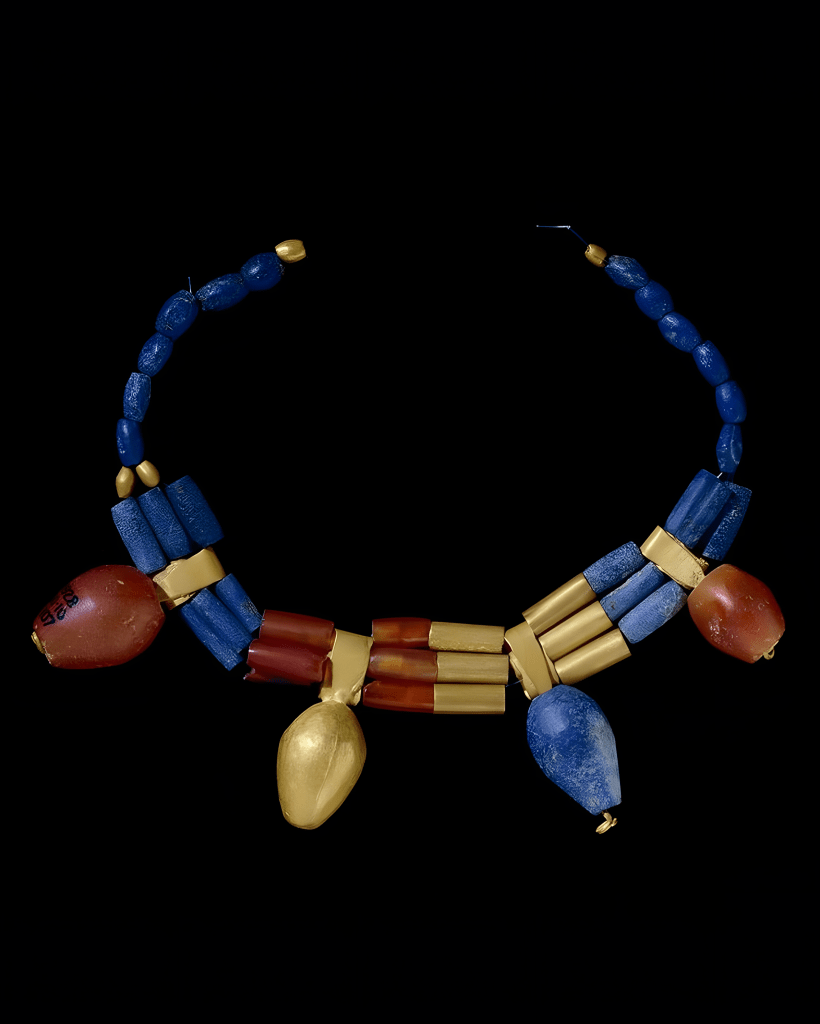
This bacelet was excavated from a residential site in the city-state of Ur around 4,500 years ago, when Sumerian civilization was at its peak.
In Mesopotamia, this era was defined by sophisticated gold craftsmanship, the appearance of written historical records, the construction of massive brick temples, and the intense, recurring warfare between powerful rival kingdoms like Ur, Lagash, and Kish.
In a way, it was this very violence that fuelled the art, since kings used their war treasures to project power and divine favour. The more successful a king was in war, the more gold he could transform into exquisite jewellery to wear, dedicate to the temples, or carry into his own tomb to prove his status to the gods.
메소포타미아에서 이 시대는 정교한 금세공 기술, 문자로 기록된 역사서 등장, 거대한 벽돌 신전 건설, 그리고 우르, 라가시, 키시와 같은 강력한 경쟁 왕국 간 치열하고 반복적인 전쟁으로 특징짓는다.
어떻게 보면, 바로 이러한 폭력이 예술을 촉발시킨 원동력이 되었다.
왕들은 전쟁에서 얻은 전리품을 권력과 신의 은총을 과시하는 수단으로 사용했기 때문이다.
전쟁에서 승리할수록 더 많은 금을 정교한 장신구로 만들어 착용하거나, 신전에 바치거나, 심지어 자기 무덤에 안치함으로써 신들에게 자신의 지위를 증명할 수 있었다.
 HeriTrip.com
댓글 남기기