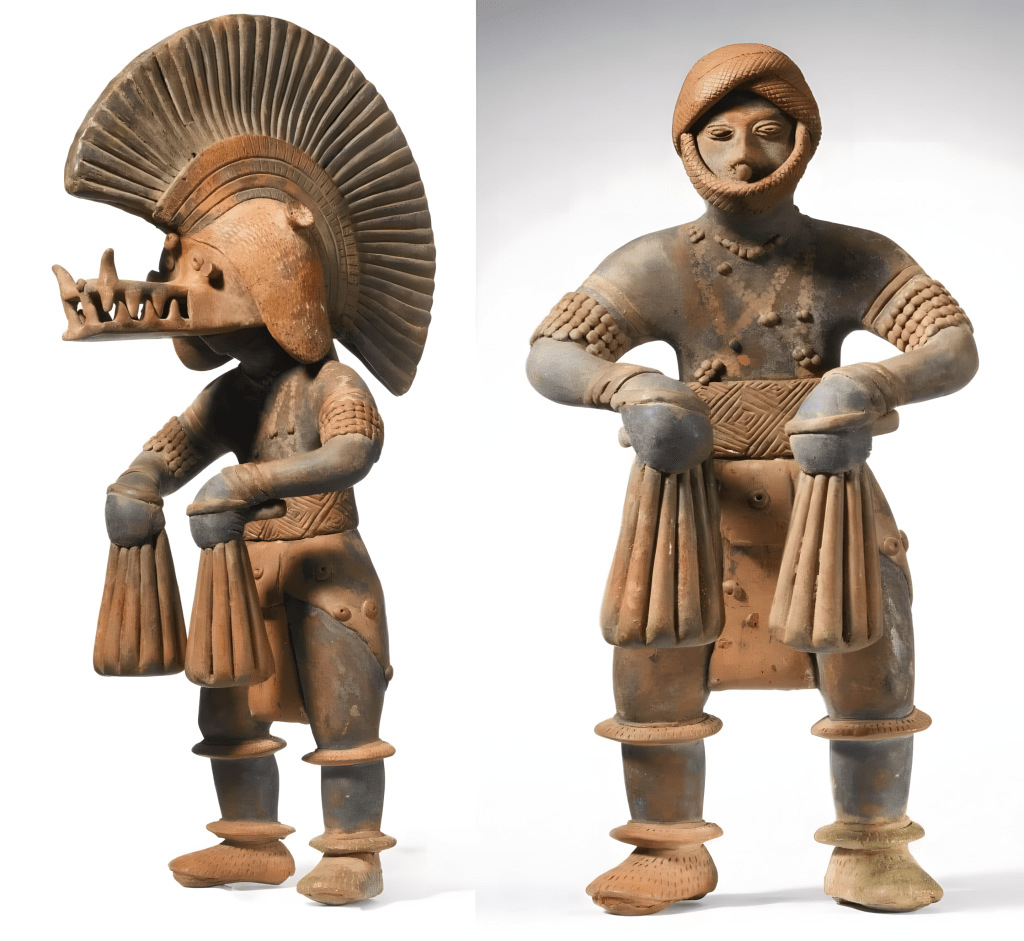
This striking terracotta figure from the Colima culture of ancient western Mexico (300 BCE – 300 CE) portrays a dancer wearing a removable crocodile helmet, capturing a dynamic blend of artistry and ritual symbolism The dancer’s pose suggests movement, possibly part of a ceremonial performance honoring nature or deities associated with crocodiles This crocodile motif often symbolized power and protection, as the animal held great significance in Mesoamerican cultures Colima artisans skillfully crafted this piece, adding a touch of realism by making the helmet detachable, emphasizing the connection between human and animal.
고대 멕시코 서부 콜리마 문화Colima culture (기원전 300년~기원후 300년)에서 발견된 이 인상적인 테라코타 조각상은 탈착 가능한 악어 투구를 쓴 무용수를 묘사하며, 예술성과 의례적 상징성이 역동적으로 조화를 이룬다.
무용수 자세는 움직임을 암시하며, 아마도 자연이나 악어와 관련된 신들을 기리는 의식 공연의 일부였을 것으로 추정한다.
악어는 메소아메리카 문화에서 큰 의미를 지닌 동물이었기에, 이 모티프는 종종 힘과 보호를 상징했다.
콜리마 장인들은 투구를 탈착 가능하게 만들어 사실감을 더하고 인간과 동물의 연결성을 강조하는 등 이 작품을 정교하게 제작했다.
 HeriTrip.com
댓글 남기기