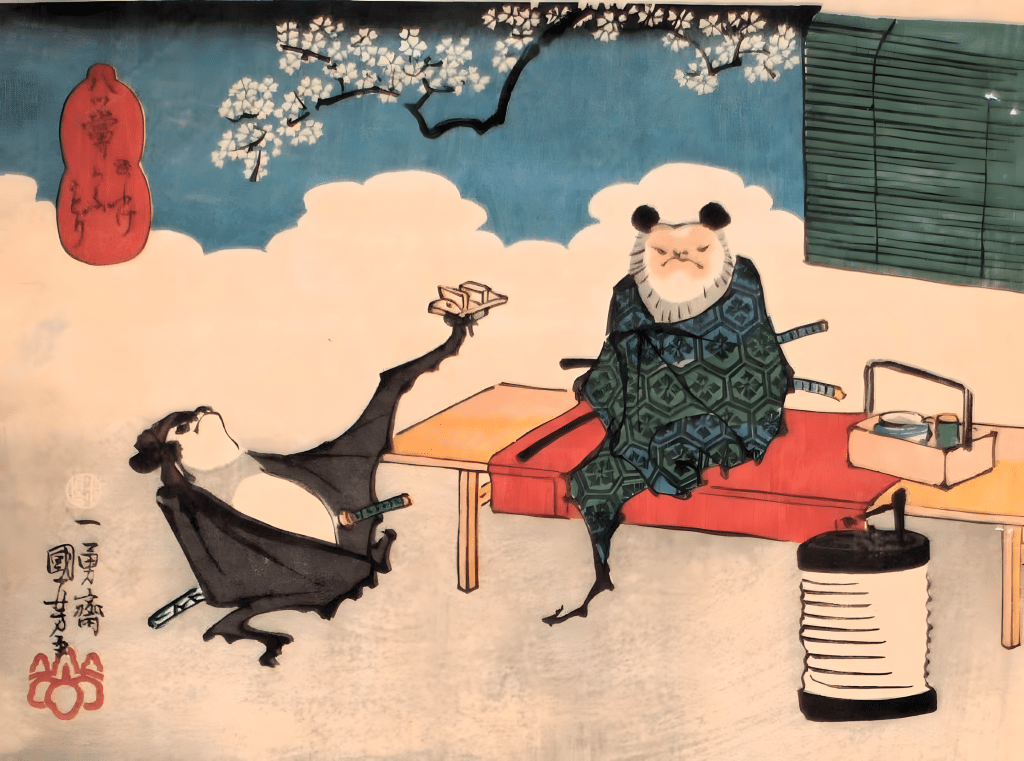
Comic Bats (Yatsuatari dōke kōmori). Artist: Utagawa Kuniyoshi, circa 1846. Medium: Polychrome woodblock print. Source / Collection: Richard Kruml – JapanesePrints-London.
In the early 1840s, the Tokugawa shogunate passed strict censorship laws known as the Tenpō Reforms to stop luxury spending in society. The government banned ukiyo-e artists from drawing popular kabuki theater actors. Artists who broke these rules faced heavy penalties, including the destruction of their woodblocks. To get around the censorship, Kuniyoshi found a solution in humor. He began drawing the banned actors as cats, frogs, and bats. The people of Edo instantly recognized their favorite actors from the clothes and specific patterns these human-like animals wore.
The artwork I’m sharing is a parody of Sukeroku Yukari no Edo Zakura, one of the most famous kabuki plays of its time. The cherry blossoms in the background serve as a visual nod to the phrase “Edo Cherry Blossoms” in the play’s title. The bat on the left, with its purple headband and black appearance, plays the main character, Sukeroku. The white-bearded figure on the right takes on the role of the story’s main villain, the old samurai Ikyu. In the original play,
Sukeroku tries to provoke Ikyu into drawing his sword, hoping to find his stolen family heirloom sword. To anger him, he deliberately holds his pipe between his toes and offers it to him.
In Japanese culture, it’s an unacceptable insult to offer someone an object with your foot. The bat presenting the smoking accessory with its foot captures that iconic moment of provocation from the stage. The artist used his artistic cleverness to bypass the government bans and continued sharing the era’s beloved theater scenes with the public.
코믹 박쥐 (야쓰아타리 도케 코모리Yatsuatari dōke kōmori). 작가: 우타가와 쿠니요시Utagawa Kuniyoshi, 1846년경. 재료: 채색 목판화Polychrome woodblock print. 출처/소장: 리처드 크럼 – 일본판화-런던Richard Kruml – JapanesePrints-London.
1840년대 초, 도쿠가와 막부는 사회의 사치스러운 소비를 억제하기 위해 덴포 개혁Tenpō Reforms이라는 엄격한 검열법을 제정했다.
정부는 우키요에 화가들이 인기 있는 가부키 배우를 그리는 일을 금지했다.
이 규칙을 어긴 화가들은 목판 파괴를 포함한 무거운 처벌을 받았다.
쿠니요시는 검열을 피하기 위해 유머를 활용했다.
그는 금지된 배우들을 고양이, 개구리, 박쥐로 그리기 시작했다.
에도 사람들은 이 사람처럼 생긴 동물들이 입은 옷과 특유의 무늬를 보고 자신이 좋아하는 배우들을 금방 알아볼 수 있었다.
소개하는 이 작품은 당시 가장 유명한 가부키 연극 중 하나인 스케로쿠 유카리노 에도 자쿠라를 패러디한 것이다.
배경의 벚꽃은 연극 제목에 나오는 “에도 벚꽃”이라는 구절을 시각적으로 표현한 것이다.
왼쪽에 보라색 머리띠를 두르고 검은색 옷을 입은 박쥐는 주인공 스케로쿠를, 오른쪽에 흰 수염을 기른 인물은 악당인 늙은 사무라이 이큐를 연기한다.
원작에서 스케로쿠는 도난당한 가문의 가보인 검을 되찾기 위해 이큐를 도발하여 검을 뽑게 하려고 한다.
이를 위해 그는 일부러 발가락 사이에 파이프를 끼운 채 이큐에게 건낸다.
일본 문화에서 발로 물건을 건네는 것은 용납할 수 없는 모욕이다.
박쥐가 발로 담배를 건네는 모습은 무대에서 벌어지는 그 상징적인 도발 장면을 포착한 것이다.
작가는 이러한 예술적 기교를 통해 정부의 금지령을 피해 당시 사랑받던 연극 장면들을 대중에게 계속해서 선보였다.
 HeriTrip.com
댓글 남기기