2023년 봄, 영국 링컨셔Lincolnshire 주 도닝턴온베인Donington-on-Bain 인근 경작한 비탈면을 금속 탐지기로 탐색하던 두 사람이 흙 속에서 작은 금빛 섬광을 감지하기 시작했다.
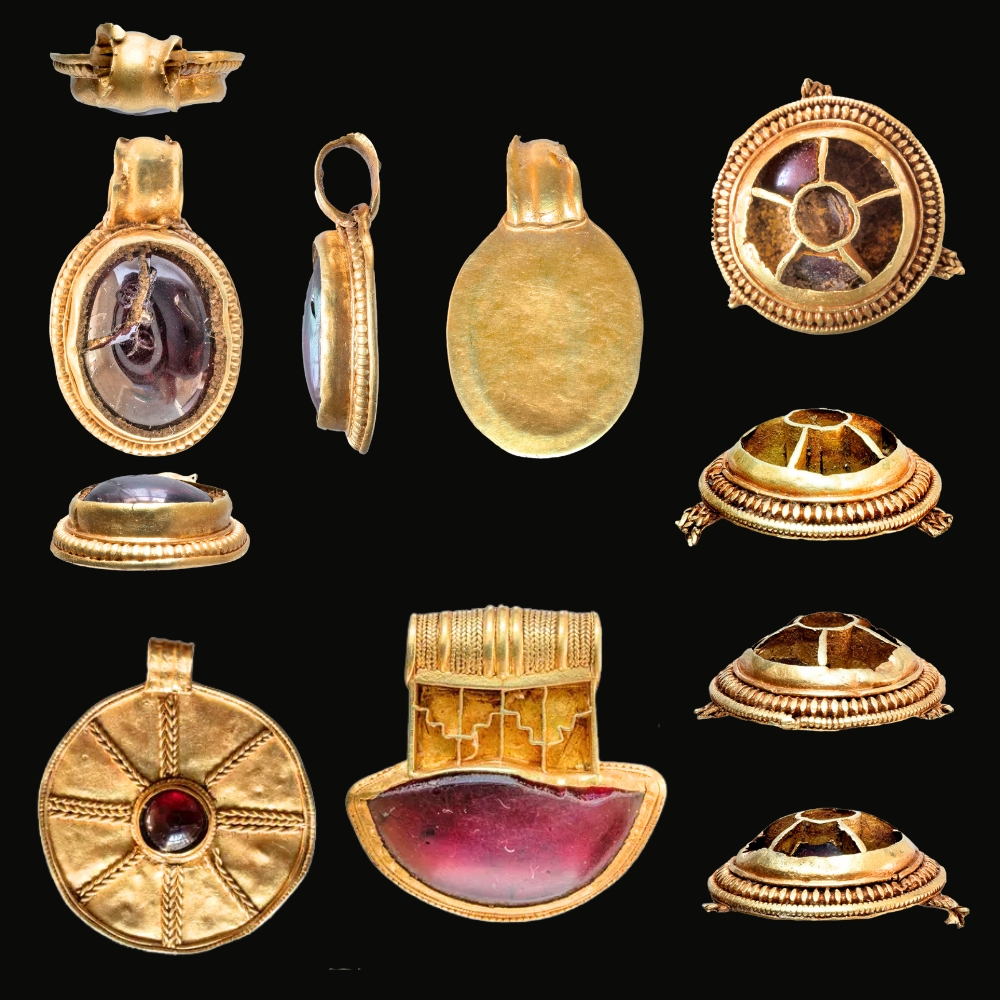
그들이 발견한 것은 7세기 무렵 금과 가넷garnet으로 만든 장신구 다섯 점이 밀집된 모습이었다.
이에는 여러 개 펜던트와 돔형domed 가넷 장식이 포함되는데, 이 장식은 원래 브로치 일부였을 가능성이 있다.
구슬, 간격 조절용 부품, 뼈, 또는 부장품이 없었기 때문에 고고학자 리사 브런들Lisa Brundle (Portable Antiquities Scheme)은 이것이 목걸이 매장이 아니라, 금세공사가 재가공을 위해 오래된 장신구를 숨겨두었거나, 의도적인 “의식”을 위해 매장했거나, 긴박한 순간에 숨겨두었다가 다시는 찾지 못한 귀중품일 가능성이 높다고 주장했다.
이는 링컨셔에서 발견된 가장 큰 규모의 금과 가넷 장신구 무더기였으며, 보물로 지정되어 2025년 링컨 박물관Lincoln Museum에 소장되었다.
In spring 2023, two metal detectorists sweeping a plowed hillside near Donington-on-Bain in Lincolnshire started picking up small flashes of gold in the churned soil.
What they’d stumbled into was a tight cluster of five 7th-century pieces, gold-and-garnet jewelry, including several pendants and a domed, garnet-set mount that may have started life as part of a brooch.
Because there were no beads, spacers, bones, or grave goods, archaeologist Lisa Brundle (Portable Antiquities Scheme) argued it probably wasn’t a plowed-out necklace burial, and instead may represent a goldsmith’s stash of older pieces for reworking, a deliberate “ritual” deposit, or valuables hidden during a tense moment and never retrieved.
It’s the largest known group of gold-and-garnet jewelry from Lincolnshire, and it was reported as Treasure and later acquired by Lincoln Museum in 2025.
 HeriTrip.com
댓글 남기기