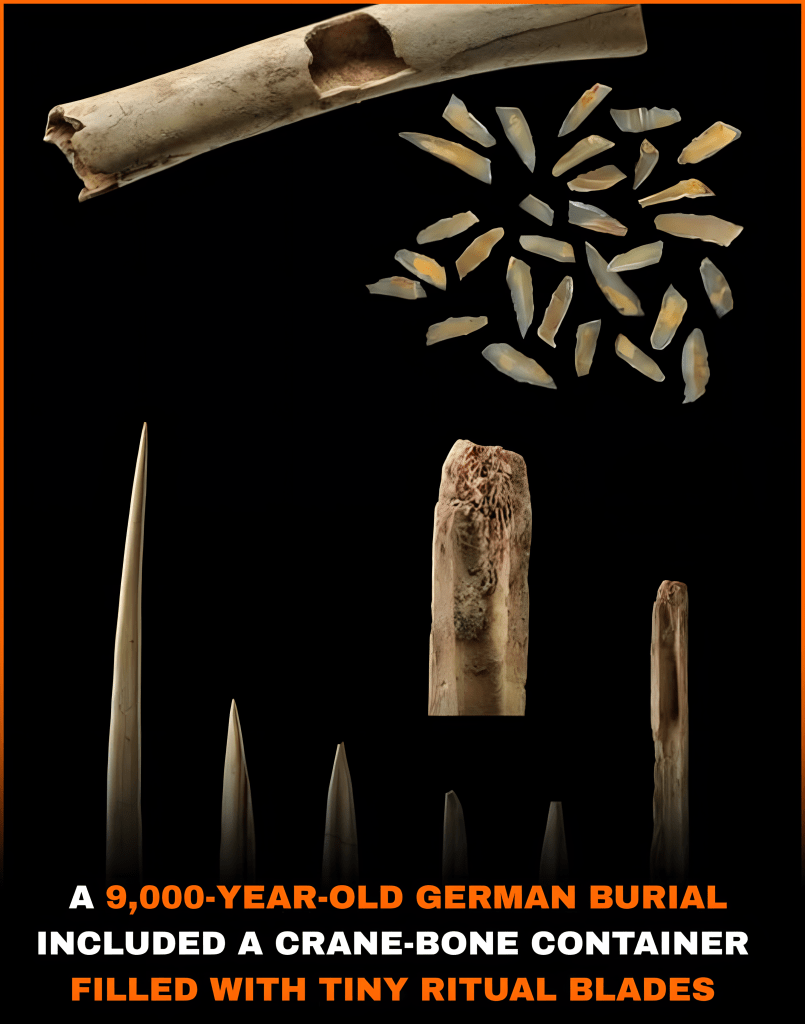
Archaeologists in eastern Germany uncovered a remarkable 9,000-year-old Mesolithic burial believed to belong to a shaman. The grave contained an unusual set of objects, including a crane leg bone carefully fashioned into a small container holding tiny flint blades. Bone points and additional tools were also placed alongside the individual, suggesting ritual activity and specialized knowledge.
The deliberate arrangement of these items indicates that the deceased likely held an important spiritual or healing role within their community. Such burials reveal the symbolic richness of prehistoric life, demonstrating that long before written records, societies recognized and honored spiritual leaders with meaningful objects reflecting identity, craftsmanship, and belief.
독일 동부에서 발견된 9,000년 된 중석기 시대Mesolithic 무덤에서 출토한 유물들이다.
전반하는 양태로 보아 이곳에 묻힌 사람은 샤먼으로 본다.
그에 어울리게 특이한 유물이 많이 발견되었는데, 개중에 학 다리뼈를 정교하게 깎아 만든 작은 용기 안에 작은 플린트 칼날들flint blades을 담아 놓은 것도 있었다.
뼈로 만든 화살촉과 다른 도구들도 함께 묻혀 있었는데, 이는 주술 활동과 전문적인 지식을 시사한다.
이러한 유물들의 의도적인 배치는 고인이 공동체 내에서 중요한 영적 또는 치유적 역할을 수행했음을 나타낸다.
이러한 매장 방식은 선사 시대 삶의 풍부한 상징성을 보여주며, 문자가 발명되기 훨씬 이전부터 사회가 정체성, 기술, 그리고 신념을 반영하는 의미 있는 물건들을 통해 영적 지도자를 인정하고 존경했음을 엿보인다.
 HeriTrip.com
댓글 남기기