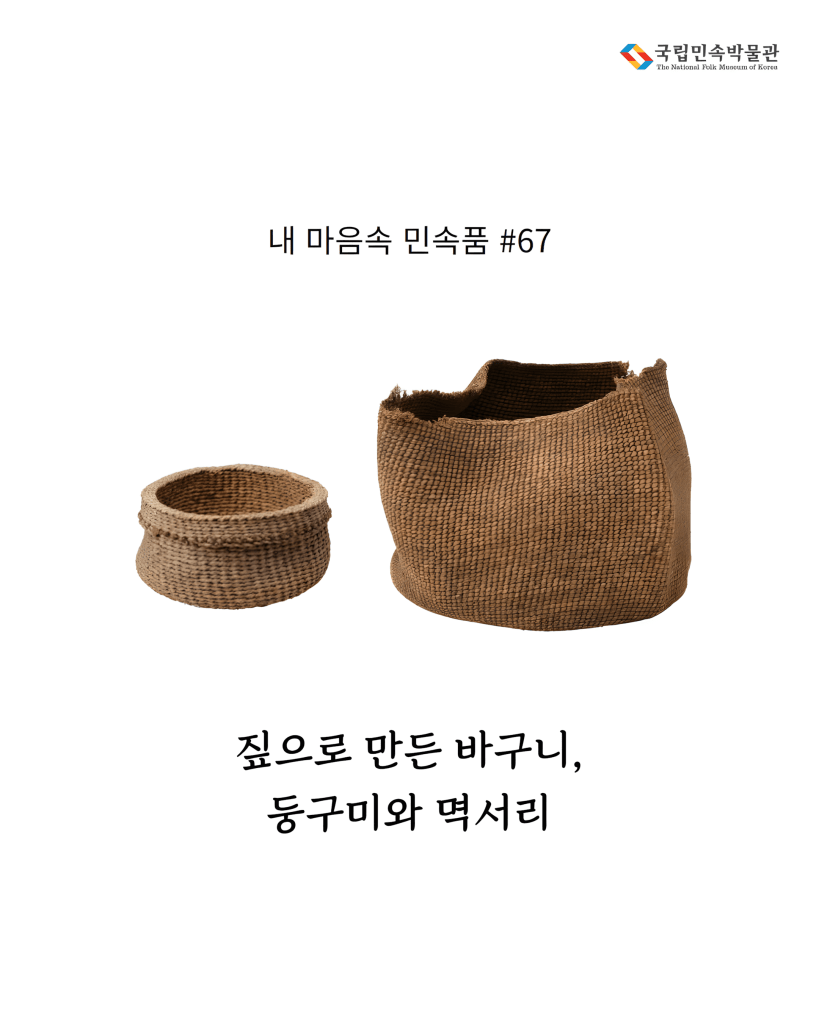
짚으로 만든 바구니, 둥구미와 멱서리
바구니는 주변에서 쉽게 구할 수 있는 식물 줄기를 엮어 만든 그릇입니다. 가벼우면서도 견고하고, 망가져도 언제든 다시 만들 수 있다는 큰 장점이 있습니다.
덕분에 시공을 막론하고 어디에서나 찾아볼 수 있어 우리나라에서도 널리 사용되어왔습니다. 특히 볏짚은 벼농사를 짓는 우리나라에서 가장 흔히 볼 수 있는 재료로, 밀짚이나 보릿짚보다 부드러워 바구니를 만들기에 적합합니다.
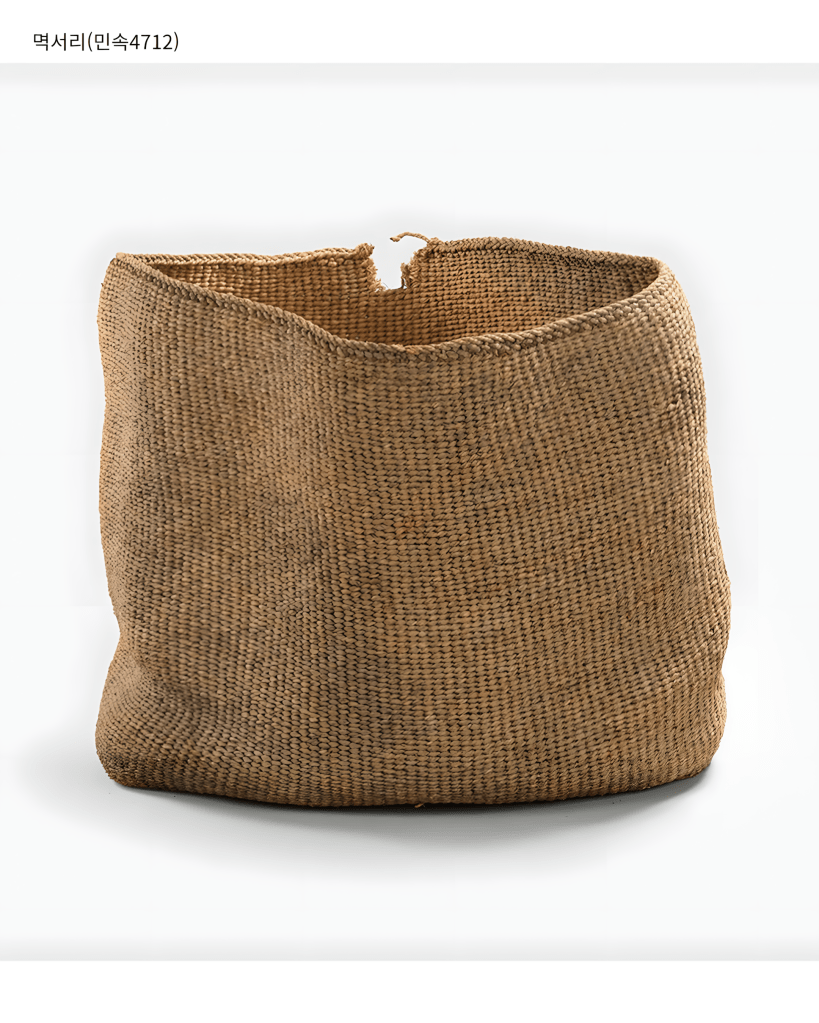
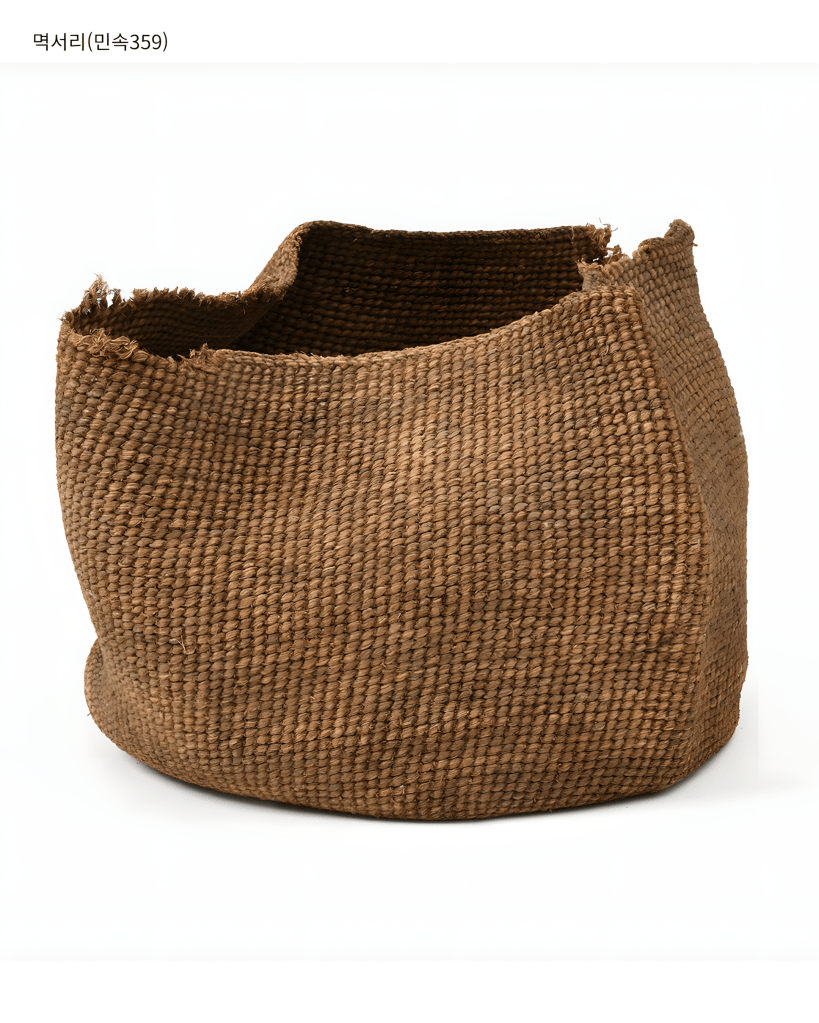
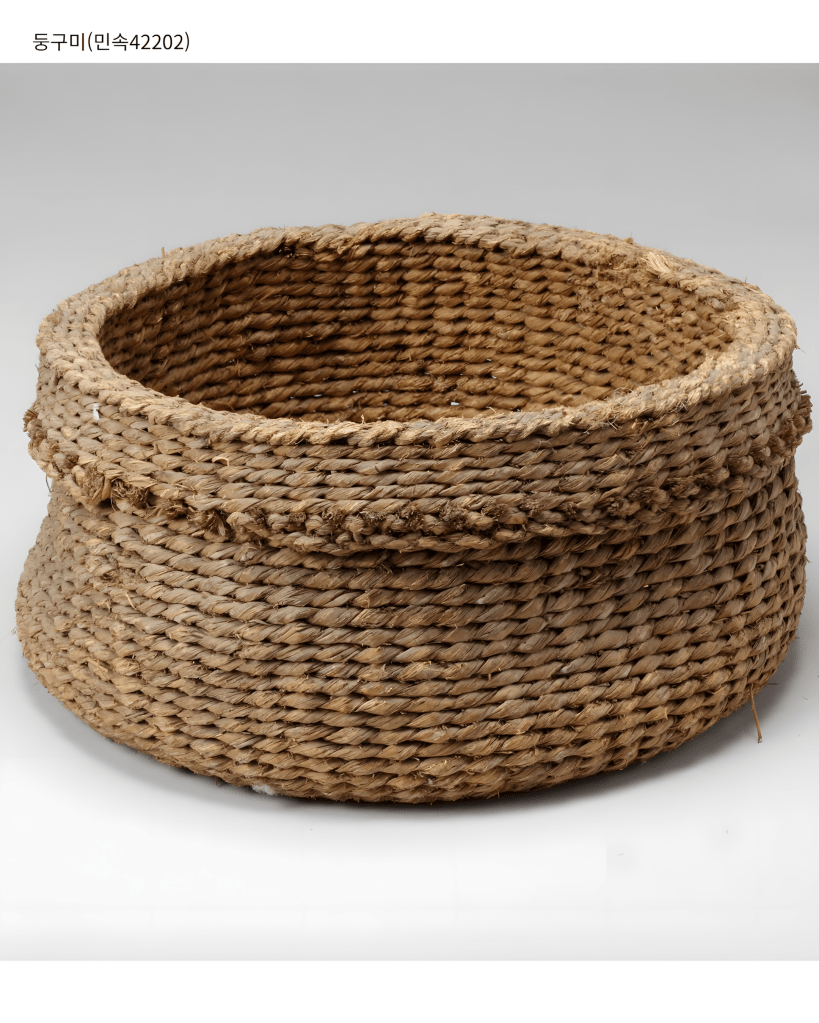
볏짚으로 만든 바구니 중 다용도로 사용되는 것으로는 둥구미와 멱서리가 있습니다. 둥구미는 바닥이 둥근 원통형으로 홑겹이나 두 겹으로 만들었습니다. 멱서리는 방형 바닥에 둘레가 넓은 자루 모양으로, 입구를 오므릴 수 있도록 끈을 달기도 했습니다.
대체로 둥구미는 짧은 거리를 쉽게 들고 나를 수 있게 작았고, 멱서리는 저장성을 고려해 크게 만들었습니다. 습기에 취약하다는 치명적인 단점이 있어 어업용, 식생활용으로는 적합하지 않지만, 촘촘해서 알곡이 흐르거나 낄 염려가 없어 농업 용구로는 필수적이었습니다.
짚은 수분이 충분해야 작업이 용이한 재료입니다. 봄, 가을에는 날씨가 건조하여 볏짚이 쉽게 바스러지고 여름에는 더위로 인해 작업이 쉽지 않습니다. 따라서 농한기인 한겨울에 옹기종기 실내에 모여 앉아 물을 축인 짚을 가져다 두고 작업했습니다.
덕분에 아이들은 누군가에게 배우지 않아도 볏짚으로 둥구미와 멱서리를 만드는 어른들의 모습을 겨우내 어깨너머로 보고 스스로 만드는 법을 터득했죠.
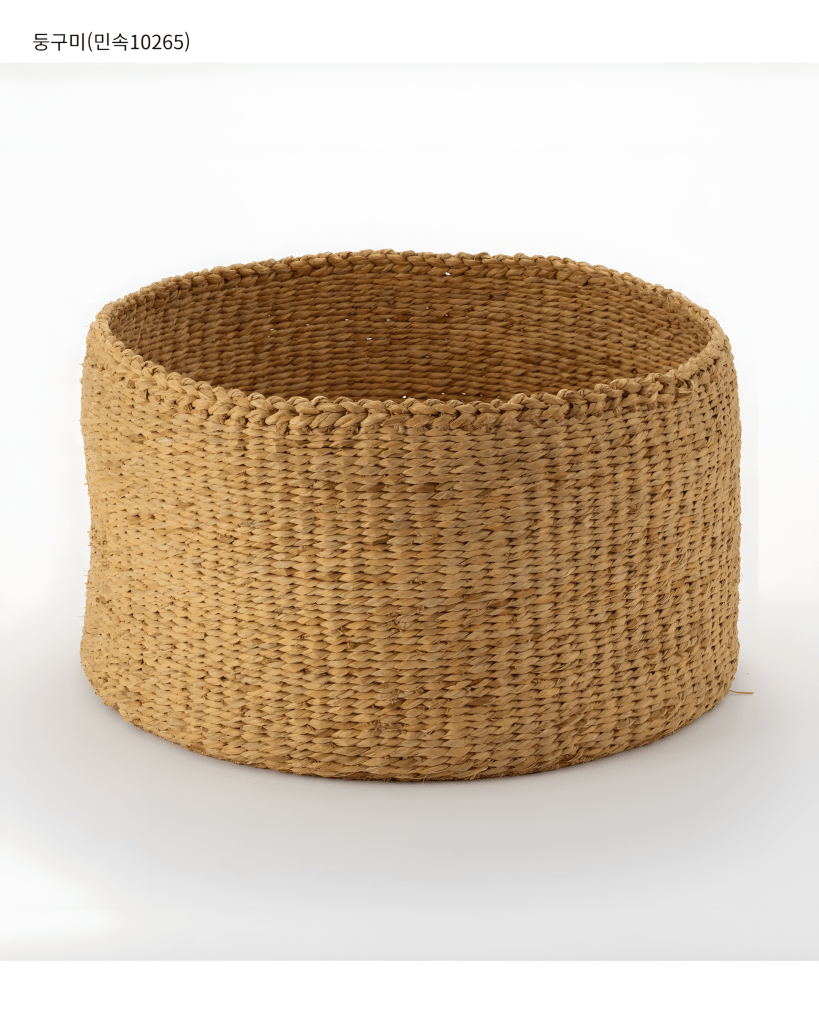
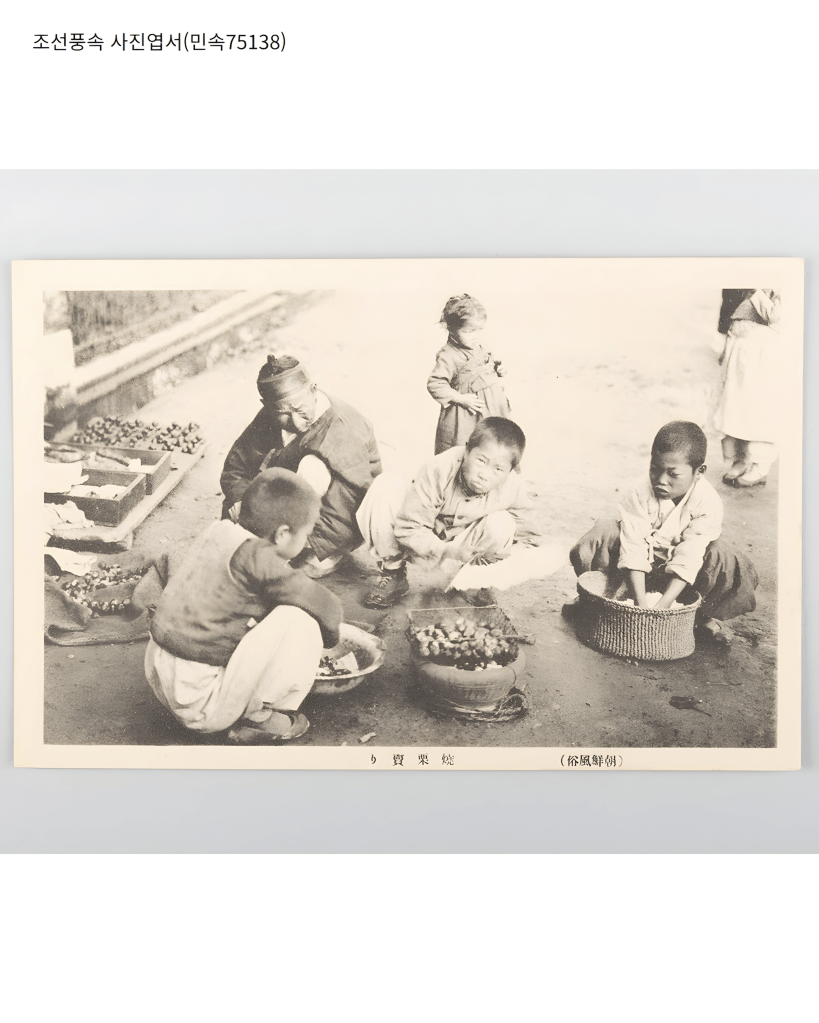
산과 들에 자생하는 식물을 채취하고, 각각의 특성에 알맞게 가공하여, 용도에 맞추어 엮고 사용하는 과정은 자연과 인간 그리고 문화의 상호작용이 이루어지는 과정입니다. 그렇다면 둥구미와 멱서리는 단순한 물건이 아니라 우리의 생활을 담고 있는 문화적 산물이라고 보아도 되지 않을까요?
글: 김옥천 국립민속박물관 학예연구사
소장품 정보: 둥구미(민속10265, 42202), 멱서리(민속359, 4712), 조선풍속 사진엽서(민속75138)
A Basket Woven with Straw: Dunggumi & Myeokseori
A basket is a vessel made from plant stems that are abundant in the local area. It is lightweight, durable, and easy to repair when damaged, which is a big advantage. Therefore, straw baskets are widely used regardless of time or place, and Korea is no exception. In Korea, where rice farming is predominant, rice straw is the most commonly used material because it is softer and more suitable for weaving than wheat or barley straw.
Among rice-straw baskets in Korea, dunggumi and myeokseori stand out for their varied roles. Dunggumi is a cylindrical container with a round base and made in single or double layers. In contrast, myeokseori has a rectangular base, a wide, bag-like upper section, sometimes with a drawstring at the opening. Dunggumi was generally made small for easy carrying over short distances, while myeokseori was larger, suitable for storage purposes. Although straw baskets are not ideal for fishing or food-related uses due to their vulnerability to moisture, they are essential in agriculture because they are densely woven, preventing grains from spilling or getting trapped.
Straw is a material that works best when it contains sufficient moisture. In spring and fall, dry weather causes rice straw to crumble easily, and the summer heat makes weaving difficult. Thus, during the winter agricultural off-season, Koreans traditionally gathered indoors and wove baskets using dampened straw. Thanks to this custom, children were able to learn how to make dunggumi and myeokseori with rice straw by simply observing the adults working throughout the winter.
Gathering wild plants from mountains and fields, processing them according to their characteristics, and weaving them for specific purposes show how nature, human, and culture interact. If so, isn’t it fine to regard dunggumi and myeokseori as cultural artifacts that represent our lives, rather than just simple objects?
Written by Kim Okcheon, Curator of the National Folk Museum of Korea
Artifact Information: Dunggumi (Straw Basket) (Minsok10265, 42202), Myeokseori (Straw Container) (Minsok359, 4712), Joseon Lifestyle and Customs Postcards (Minsok75138)
 HeriTrip.com
댓글 남기기