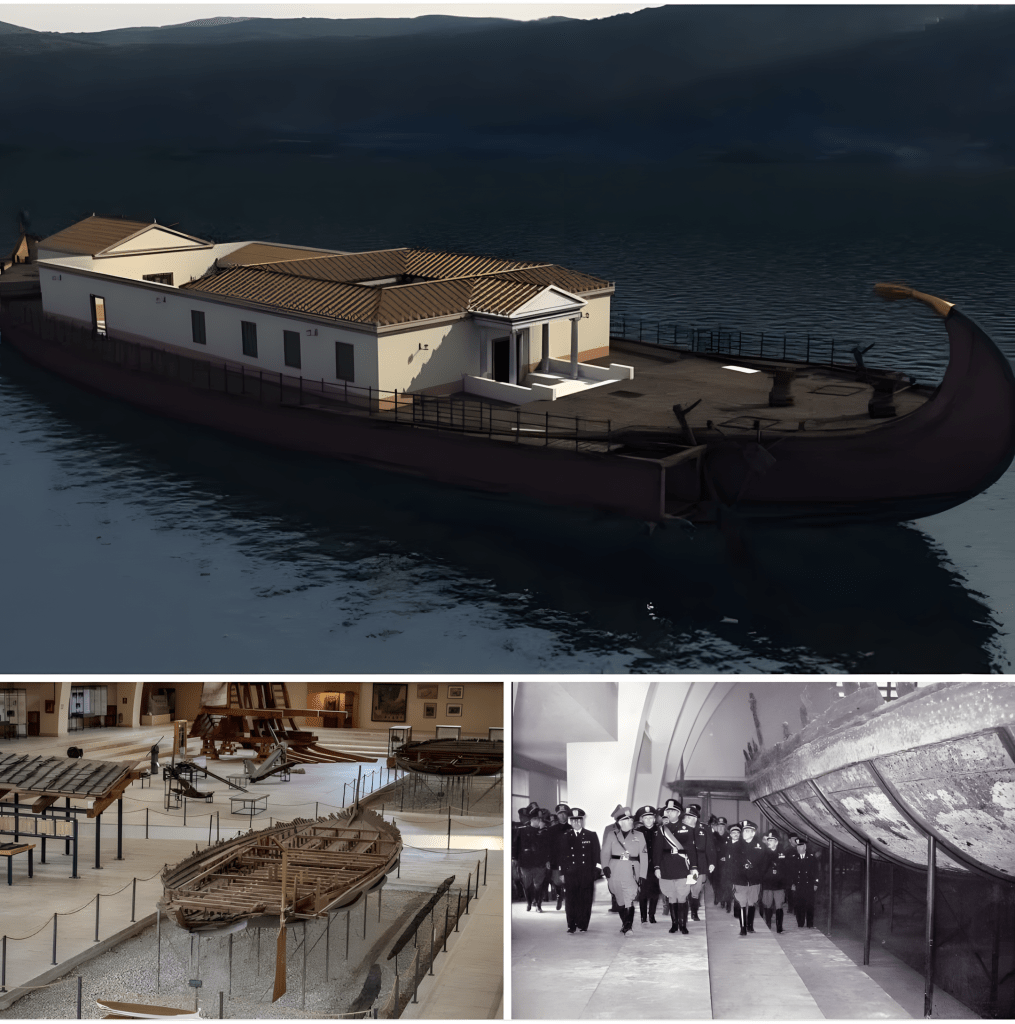
1927년 무솔리니는 로마 남쪽에 위치한 화산 분지volcanic basin인 네미 호수Lake Nemi 물을 빼내라는 명령을 내렸고, 그 결과 역사적인 고고학적 발견이 이루어졌다.
기술자들은 고대 로마의 배수 터널을 다시 열고 수위를 낮췄다.
그러자 진흙 속에서 거의 19세기 동안 잠들어 있던 거대한 목선 두 척이 모습을 드러냈다.
가이우스 칼리굴라Gaius Caligula 황제 시대에 건조된 이 배들은 대부분의 고대 로마 함선을 왜소하게 만들 정도로 거대했다.
각각 길이가 약 70미터에 달하고, 호화로운 설비를 갖추었으며, 당시 로마 함대 어떤 배와도 비교할 수 없을 정도였다.
이 발견은 지역 전설을 고고학계의 주요 사건으로 만들었다.
네미 호가 특별한 이유는 크기뿐 아니라 설비에도 있었다.
발굴자들은 대리석 바닥, 채색된 천장, 조각된 기둥머리, 구리 못으로 고정된 청동 외벽 등을 발견했다.
납과 청동으로 만든 배관은 물을 저수조와 난방 시설로 공급했으며, 배관 일부에는 황제 이름이 새겨 있었다.
기술자들은 청동 구슬 위에서 회전하는 플랫폼을 포함한 정교한 부품들을 기록했는데, 이는 초기 형태 볼 베어링으로 여겨진다.
선체는 천천히 부식되도록 납으로 덮여 있었는데, 이는 값비싼 실험적인 조선 기술의 명백한 증거다.
작은 분화구 호수에 왜 궁전을 지었을까?
네미 호수는 디아나 여신에게 신성한 곳이었고, 황제들은 로마의 정치적 시선에서 벗어나 그곳에서 의식을 거행할 수 있었다.
대부분 학자는 이 배들이 연회나 제례 공연에 사용된 의례용 바지선이었으며, 항해보다는 정박하거나 예인되었을 것이라고 추측한다.
이 배들의 사치는 마치 연극 무대 같았고, 신의 은총을 과시하는 상징이었으며, 기술을 볼거리로 승화한 물 위의 궁전이었다.
1927년부터 1932년까지 복원 작업이 진행되었고, 복원된 선체들을 전시하기 위해 호숫가에 박물관을 세웠다.
1944년, 목조 구조물들이 화재로 소실되었는데, 그 원인을 두고 지금까지도 논쟁이 계속되고 있다.
일부는 후퇴하는 독일군이 방화를 저질렀다고 주장하는 반면, 다른 일부는 미군의 강력한 포격 때문이라고 지목한다.
현재 남아 있는 것은 사진, 도면, 닻, 파이프, 장식품 등이다.
로마 항해 박물관(Museo delle Navi Romane)에서 호수 물이 어떻게 빠졌는지, 그리고 로마 공학 기술로 두 궁전을 신성한 물 위에 어떻게 띄웠는지 알아볼 수 있다.
In 1927 Mussolini ordered Lake Nemi, a volcanic basin south of Rome, to be drained and one of the greatest archeological discoveries followed.
Engineers reopened the ancient Roman outlet tunnel and lowered the water level. From the mud emerged two enormous wooden ships that had slept for nearly nineteen centuries. Built in the reign of Gaius Caligula, they dwarfed most classical vessels. Each was roughly seventy meters long, richly fitted, and unlike anything in the Roman fleet.
The find turned a local legend into one of archaeology’s headline moments. What made the Nemi ships extraordinary was not only their size but their amenities.
Excavators recorded marble pavements, painted ceilings, sculpted capitals, and bronze revetments fixed with copper nails. Lead and bronze plumbing carried water to basins and perhaps heating systems, with sections stamped in the emperor’s name. Engineers documented sophisticated fittings, including a platform that rotated on bronze balls, often cited as an early ball bearing. The hulls were sheathed in lead to slow decay, clear proof of expensive, experimental shipbuilding.
Why build palaces on a small crater lake?
Nemi was sacred to Diana, and emperors could stage rites there away from the political glare of Rome. Most scholars think the ships were ceremonial barges used for banquets and cult performances, kept moored or towed rather than sailed. Their extravagance worked as theatre and as a statement of divine favour, a watery palace that turned technology into spectacle.
The recovery ran from 1927 to 1932, and a museum rose on the shore to house the revived hulls. In 1944 a fire consumed the wooden structures, and blame has been argued ever since. According to some, it was the retreating German forces that set the fire, while others blame the heavy US artillery strikes. What survives are photographs, drawings, anchors, pipes, and ornament. Visit today and you can walk through the Museo delle Navi Romane, learn how the lake was drained, and see how Roman engineering once floated two palaces on a sacred mirror of water.
 HeriTrip.com
댓글 남기기